

Fire and slip performance of fiberglass belongs to the tested product, not to the material name, so read the test report before you accept a claim. ASTM E84 measures surface burning characteristics, and a slip claim only means something if it names the test method.
This page explains what each test covers and what to ask your supplier for.
What ASTM E84 Tells You
ASTM E84 is the standard test method for surface burning characteristics of building materials.1 A Class A result means the tested specimen met that class in that test, nothing more.
Machs test report
- Standard
- ASTM E84
- Result
- Class A
- Laboratory
- SGS
- Specimens
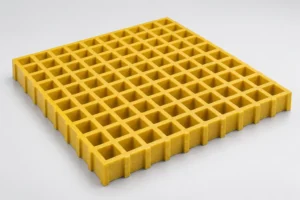
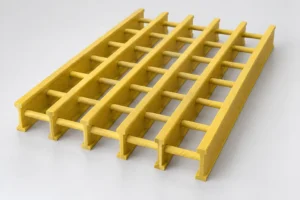
- 38 mm gritted molded grating; I-6015 pultruded grating
The report covers those specimens only. Other thicknesses, resins or products need their own report, so check the specimen on the report against what you are buying.
See the certificatesSurface Burning Is Not a Pool Fire
The UK Health and Safety Executive warned in 2012 that FRP deck gratings made with phenolic or isophthalic resin may fail after a short hydrocarbon pool fire, even when they look intact and have passed a 60-minute cellulosic test.2
If your site has a hydrocarbon fire risk, such as offshore or process areas, ask for a test that matches that fire. Machs explains the levels in its hydrocarbon fire article.
What to Ask for on Fire
- Test standardThe standard and its edition.
- SpecimenProduct, thickness and resin, matched to what you buy.
- Issuing laboratoryWho ran the test, and the date.
- Fire typeWhat the test represents: surface burning, cellulosic or hydrocarbon.
Slip Resistance: What the Rules Actually Say
US · OSHA 29 CFR 1910.224
- Keep walking-working surfaces free of hazards such as corrosion
- Support the maximum intended load
- Inspect and maintain the surfaces
- Sets no numeric coefficient of friction
UK · HSE slips guidance3
- Recommends the pendulum test to BS 7976
- Surface roughness indicates how slippery a wet floor will be
- Advises caution with ramp-test claims such as R9
A claim that OSHA requires a particular friction value is therefore not supported by this rule.
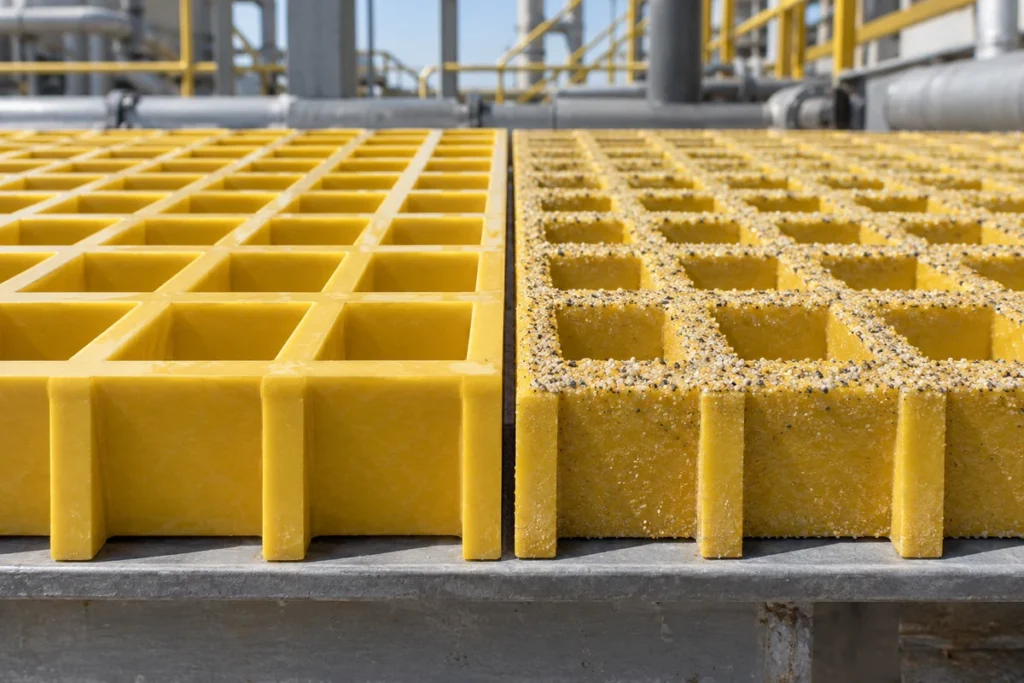
Choosing a Surface
- Match the contaminationChoose the surface for water, oil, mud or ice.
- Keep it cleanDirt and oil film reduce grip on any surface.
- Ask for named test dataData should name the method, the surface and the contamination.
Questions About Fire and Slip
Is all FRP fireproof?
No. Fire behavior depends on resin and the tested product. See the resin guide.
Does Class A mean it survives any fire?
No. It reports surface burning in the E84 test only.
Who can check my specification?
Send it to Machs engineering support with the fire and slip requirements.