L-Section01Fiberglass Angle
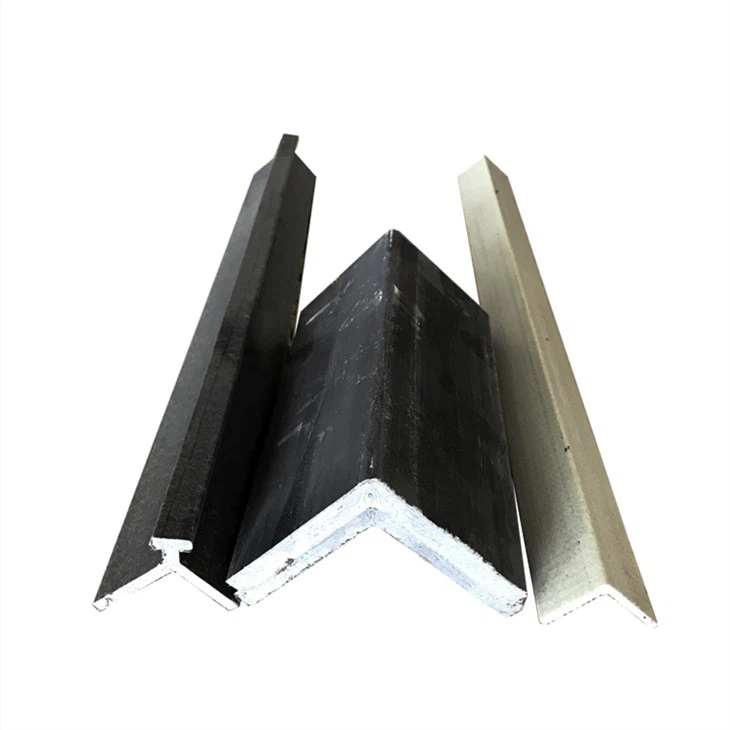
L-shaped pultruded profile for clip connections, bracing and edge trim.
- 25–150 mm
- Cut to Size

Made in our own plantGrating, profiles and structures from one factoryView all productsGuides
Start hereWhy Choose Fiberglass (FRP)?Read the overviewEngineering Tools
Learn & Download
Free toolCheck load and deflection before you orderOpen the calculatorWe mould grating, pultrude profiles and assemble FRP structures in our own plant, and confirm size, resin and load against your drawing before we quote.
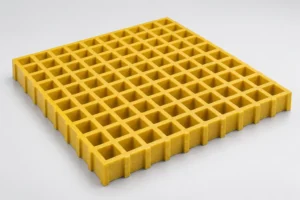
Machs fiberglass angles (FRP angles) are L-shaped pultruded profiles for clip connections, bracing, edge trim and support ledges in FRP and mixed-material structures. Selection depends on leg dimensions, fixing positions and the surrounding structure. As a fiberglass angle manufacturer, Machs supplies angles as full lengths or cut into ready-drilled clips.
Years pultruding FRP
in our own plant
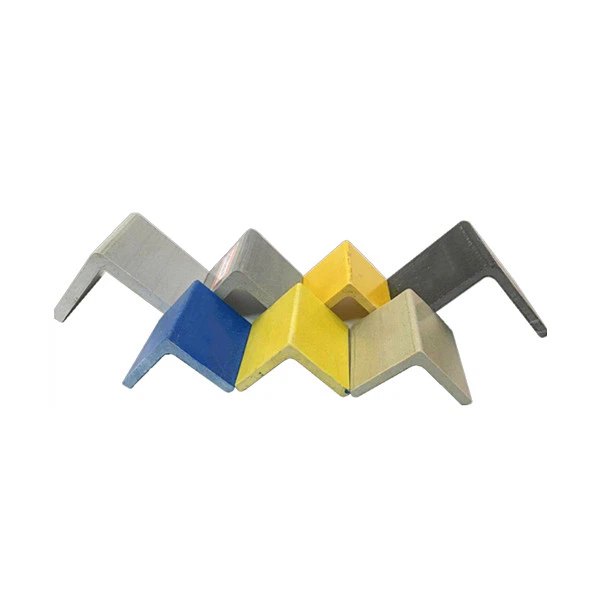
Leg Size25–150 mmProduct Range
L-Section01L-shaped pultruded profile for clip connections, bracing and edge trim.
Angles cut into clips and drilled to your hole pattern.
Why Angles
Fiberglass angle keeps connections and edges free of rust, and connections are where steel structures usually corrode first.
The same material as the members it joins, with no galvanic corrosion.
Keeps fences and frames electrically isolated.
Cut and drilled on site with carbide or diamond tooling.
Typical uses include clip angles, knee bracing, stair and platform edge trim, and grating support ledges. Production runs under an ISO 9001:2015 quality system.
25 × 25 mm to 150 × 150 mm.
From about 3 mm, increasing with leg size; custom thickness on request.
Equal-leg as standard; unequal-leg as a custom section.
Selection Guide
Three things decide the right angle: what each leg does, how the connection is made, and whether it is embedded in concrete.
Define what each leg does before choosing a size: the supporting leg, the attached leg, and the direction of applied load. Connection brackets and edge trims can look alike yet need very different stiffness and strength.
State whether the angle is a trim or a bracket. An edge trim mainly needs fit and surface control, while a bracket transfers loads through its legs and fasteners. Naming the function prevents a similar-looking profile from being accepted without structural checks.
Allow for the inside radius when fitting other parts. The radius and adjoining-part geometry affect seating, so do not force a flat component against an incompatible radius. Dimension hole locations from both the edge and the corner.
Confirm fastener layout and support conditions before cutting or drilling. Three checks often govern an angle connection: local bending of a leg, bolt bearing, and eccentric load paths.
Define the connection through the hole layout:
Agree finished length and edge quality before production:
A general FRP angle is not automatically a qualified concrete embedment component. Embedment needs a specific detail covering anchorage, concrete interaction, edge distances, and load transfer. State any embedment requirement at the enquiry stage.
Treat an embedded angle as its own engineering detail. Supply the concrete geometry, intended load and anchorage concept, and clarify whether the angle is a cover, a bearing edge or a force-transfer component. These functions need different evidence and should not share one specification based only on leg size.
Made to Order
Custom angles cover both the section and the finished part:
Leg lengths and thickness on a new die when no standard size suits the connection.
Angles cut into clips and drilled to the approved hole pattern.
Full lengths up to 12 m or more, or cut to finished length.
Get a Quote
Share leg dimensions, thickness, cut length and the connection or embedment drawing with Machs. Machs quotes standard lengths, custom sections and machined parts.
Helpful to Include
FactoryNo. 28, Longyou Road, Wuyao Town, Rugao City, Jiangsu, China
Tell us about your angle, the connection it serves and any embedment requirement. Fields marked * are required.
Accepted files: PDF, DWG, DXF, STEP, JPG, PNG, up to 10 MB each, max 3 files.
Please fill in the information, and we will send the file to your email