

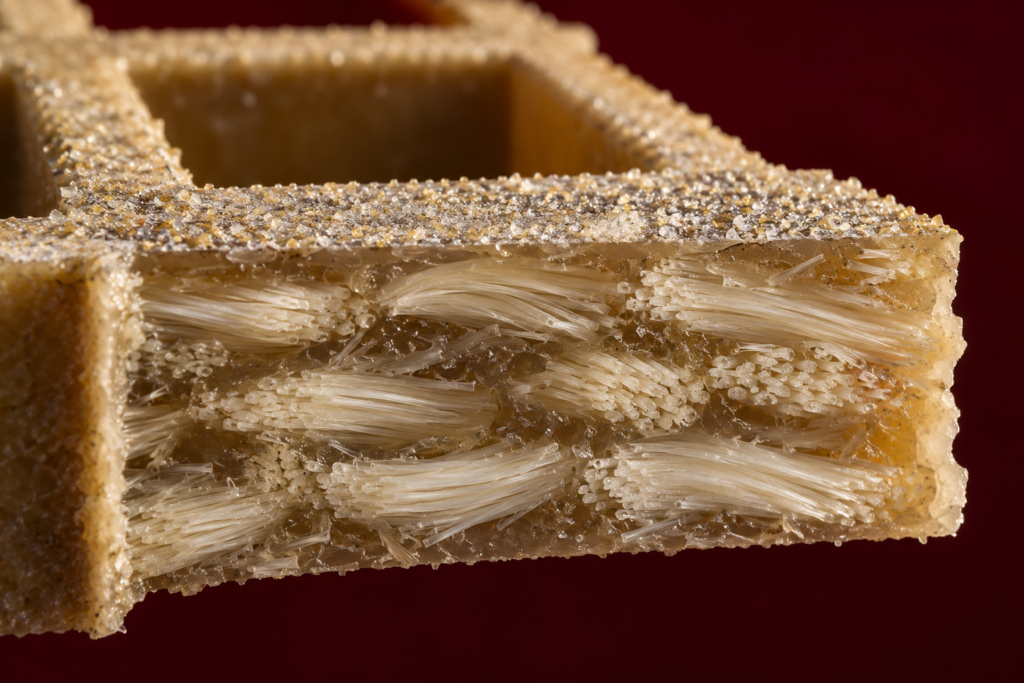
FRP stands for fiber-reinforced polymer, a composite made from a polymer and a reinforcing fiber that stay distinct from each other inside the finished part.1 When the fiber is glass, it is called fiberglass reinforced plastic, which is what most people mean by FRP or fiberglass.
This page explains what FRP is made of, why it behaves differently from metal, and where it fits. If you already know the basics, go straight to fiberglass vs steel vs aluminum.
What FRP Is Made Of
Every FRP product has two parts: a resin matrix that holds the shape, and fibers that carry the load. ACMA lists the common options as follows:1
| Part | Common options | What it does |
|---|---|---|
| Matrix (polymer) | Epoxy, vinyl ester, unsaturated polyester, polyurethane | Holds the fibers in place, passes load between them and protects them from the environment |
| Reinforcing fiber | Glass, carbon, basalt, natural fibers | Carries most of the load along its length |
Glass is the fiber behind fiberglass products, and the resin chosen sets chemical resistance, temperature range and fire behavior. The resin selection guide covers that choice.
Why FRP Behaves Differently from Metal
FRP properties depend on the matrix, the volume of fiber and the position of the fibers, so the same resin can give very different products.2 Metal is the same in every direction, while FRP is strongest along its fibers.
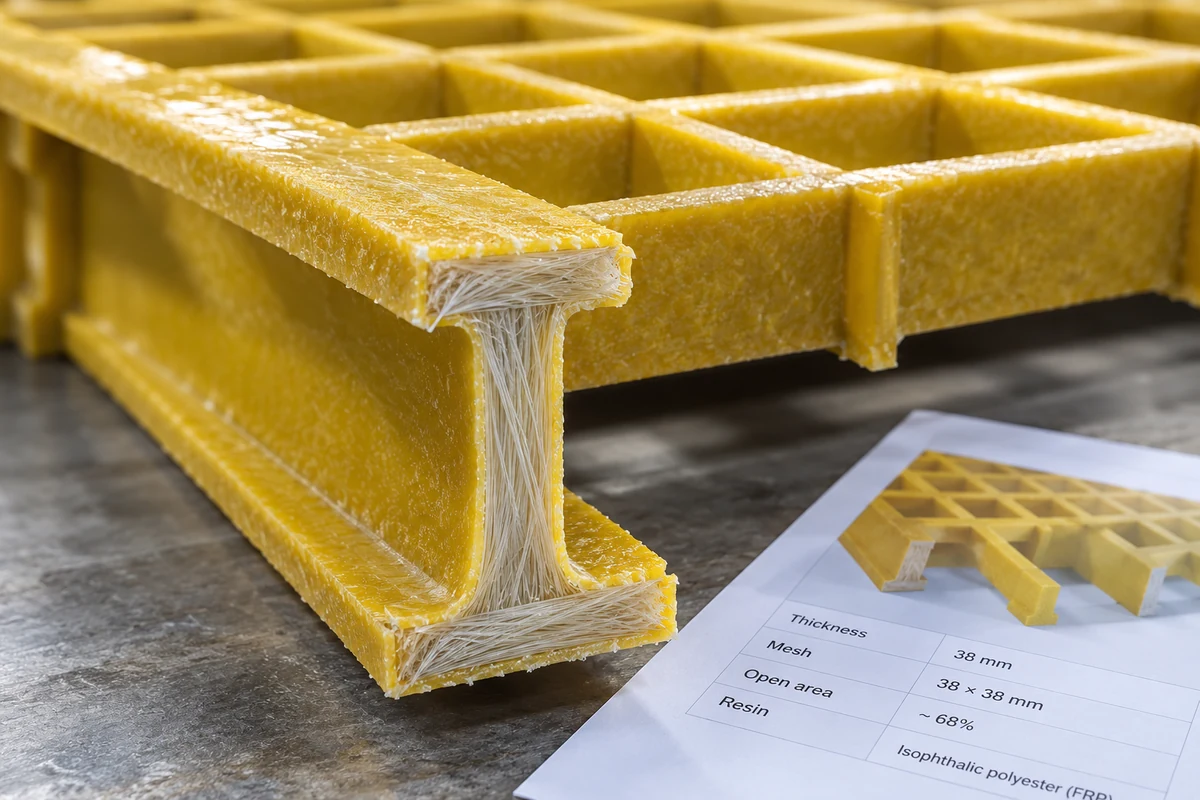
Because of this, a datasheet number for one FRP product does not transfer to another. Always compare the tested values of the actual product.
Key Properties
- Corrosion resistanceFRP does not rust like metal or rot like wood, which gives long service life with less maintenance.2
- Light weightACMA reports FRP is lighter than steel, aluminum, concrete and brick.1
- Electrical insulationSuited to work near live equipment.
- Lower stiffness than metalA design point, covered in the steel and aluminum comparison.
- Resin-limited temperature and fire behaviorRead the fire and slip guide before specifying.
How FRP Is Made
The two processes behind Machs products are pultrusion and molding. Pultrusion pulls resin-soaked fibers through a heated die to make profiles of constant section in continuous lengths,2 and molding forms panels in a mold. The pultrusion vs molding guide explains when each is used.
Where FRP Is Used
ACMA lists marine, aerospace, transportation, equipment, industrial and corrosion, building and construction, energy and infrastructure among its markets.1 For industrial and civil work, Machs supplies:
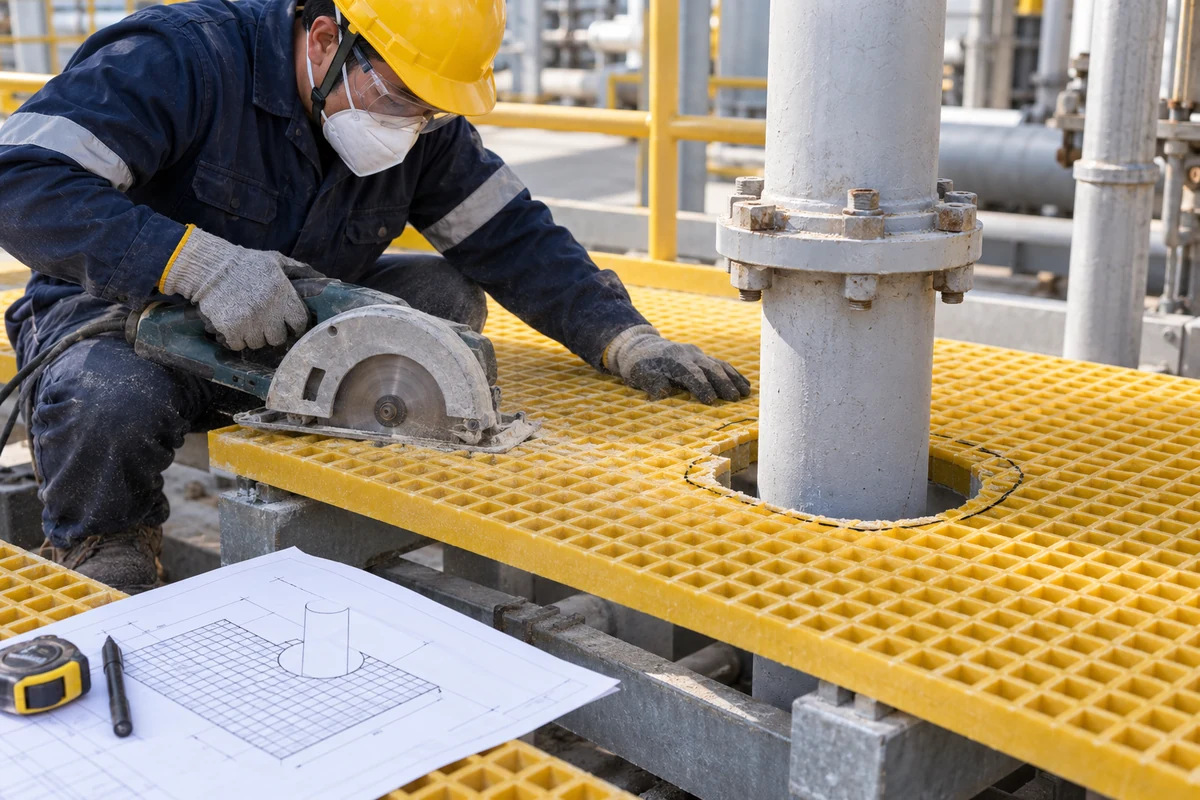
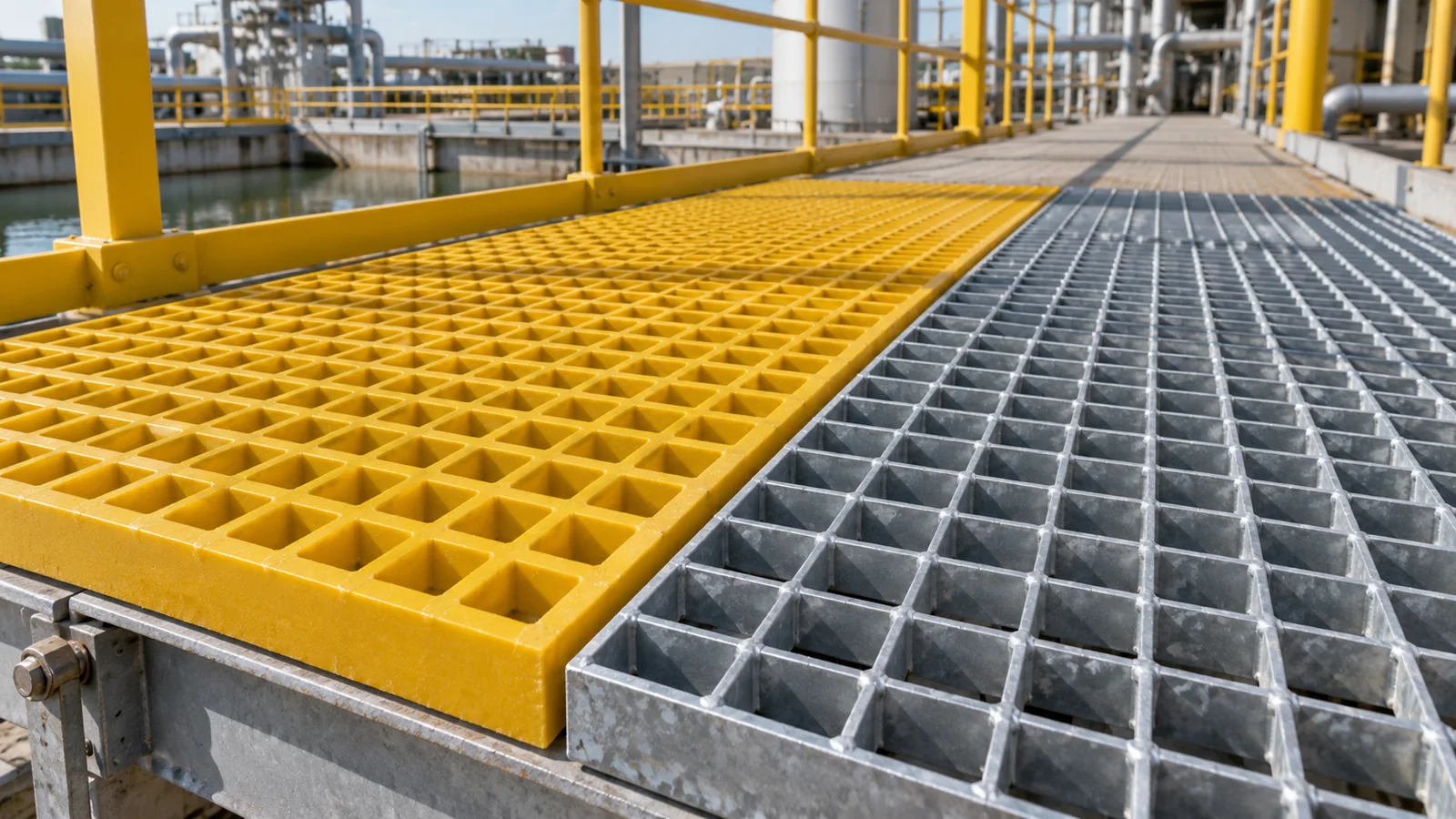
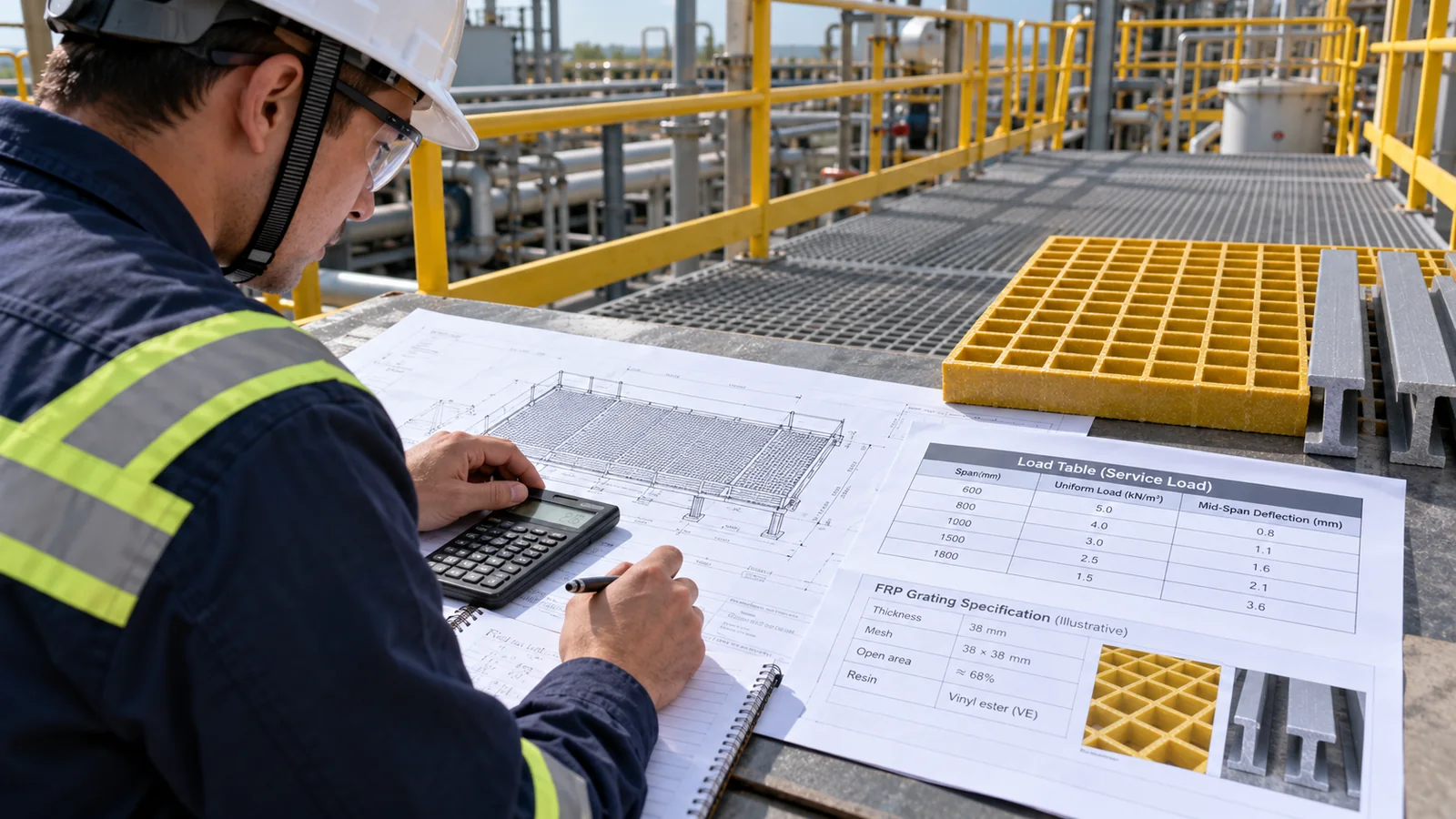
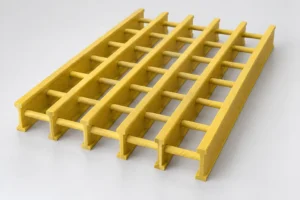
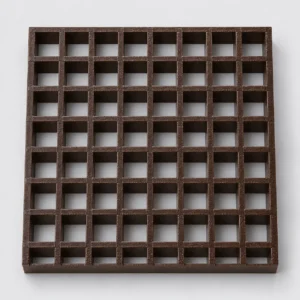
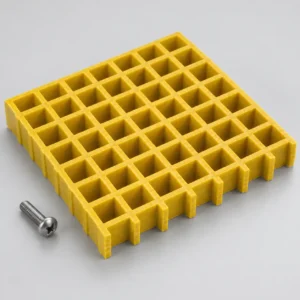
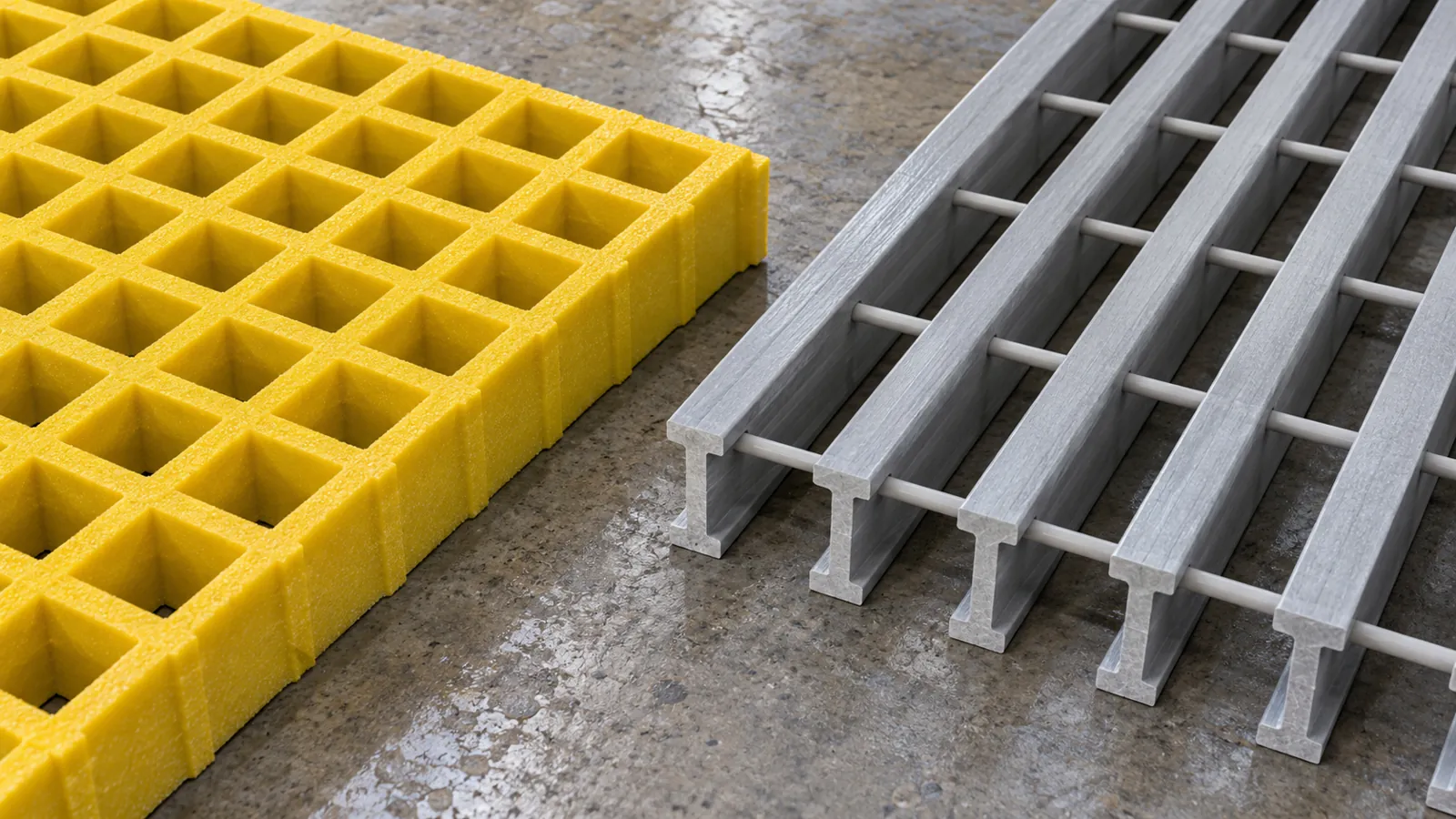
- Fiberglass GratingFloors, platforms and trench covers in corrosive plants
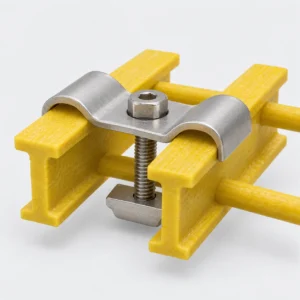
- FRP ProfilesFrames, supports and cable systems
- Fiberglass RebarConcrete exposed to seawater or de-icing chlorides
- FRP StructuresHandrails, platforms and cooling tower parts
Questions About FRP
Is FRP the same as fiberglass?
Nearly. FRP is the broader term and covers carbon, basalt and natural fibers too, while fiberglass usually means glass-fiber products. Machs makes glass-fiber products.
Is FRP just plastic?
No. The plastic is only the matrix; the fibers inside give it structural capacity.
Is FRP stronger than steel?
Not in every way. A pultruded profile can have high strength along its length, but its stiffness is lower than steel, so compare designed members instead of raw material numbers.
Can Machs make a shape I cannot find?
Yes, through custom pultrusion on a new die.