
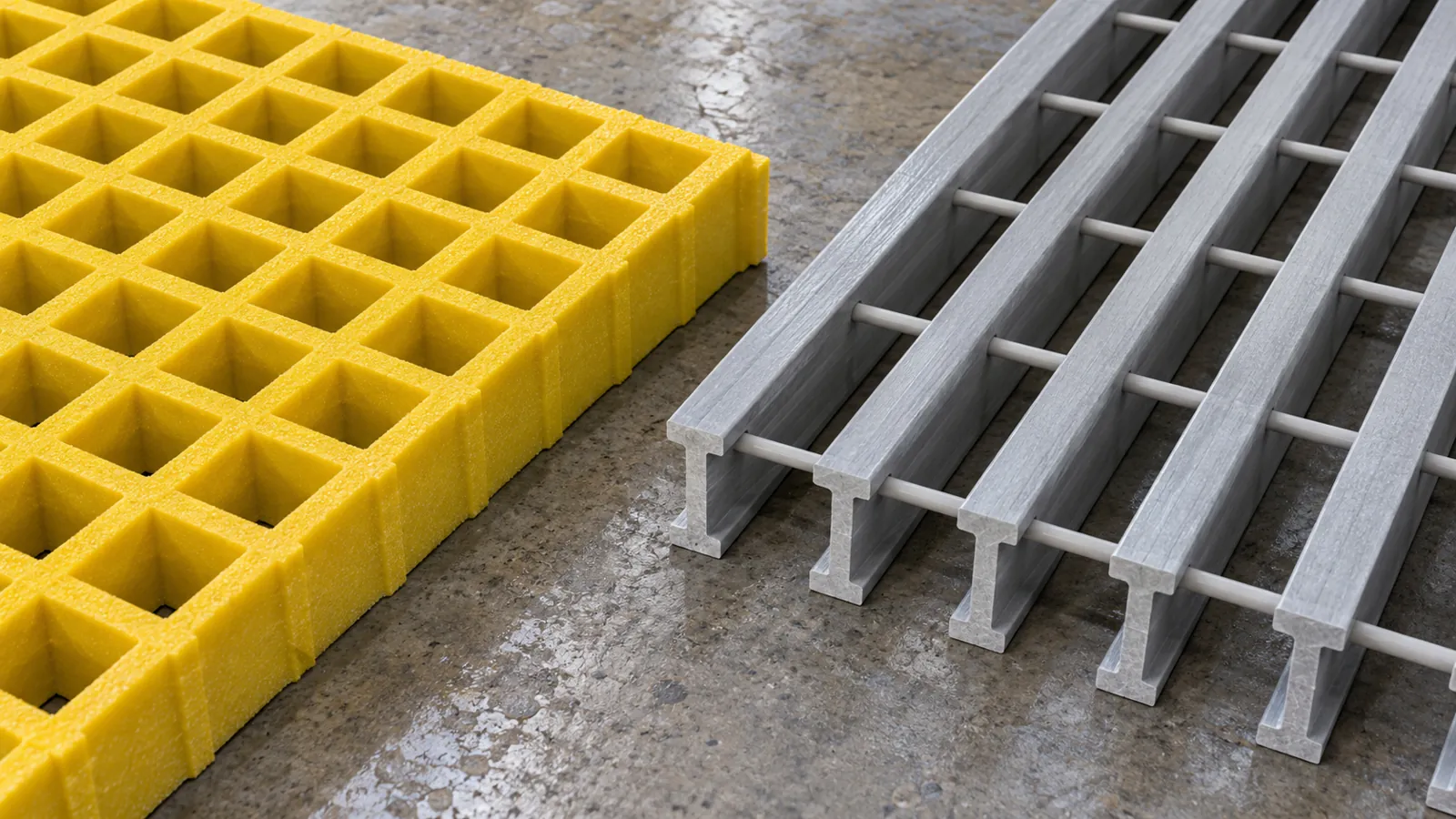

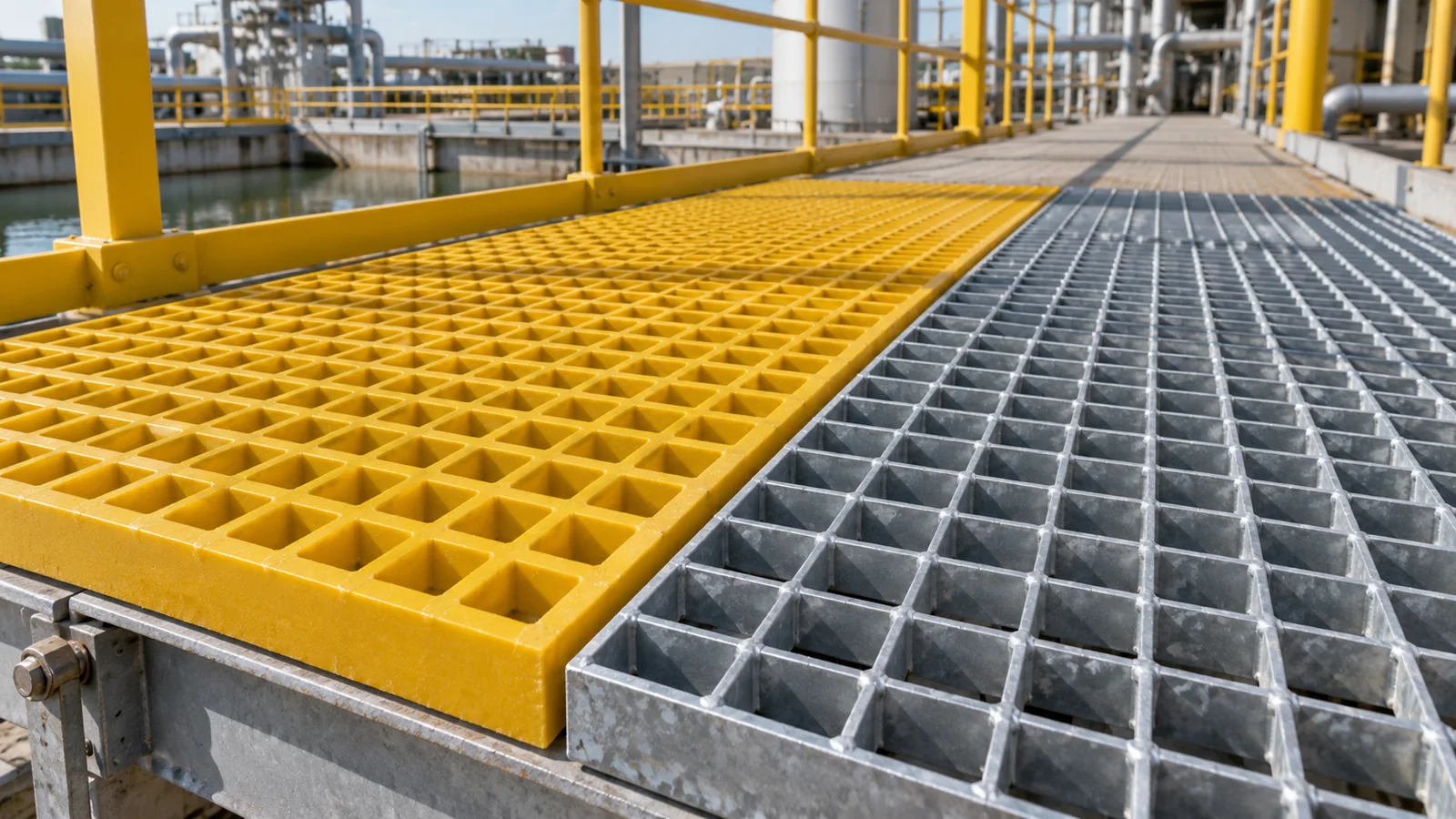
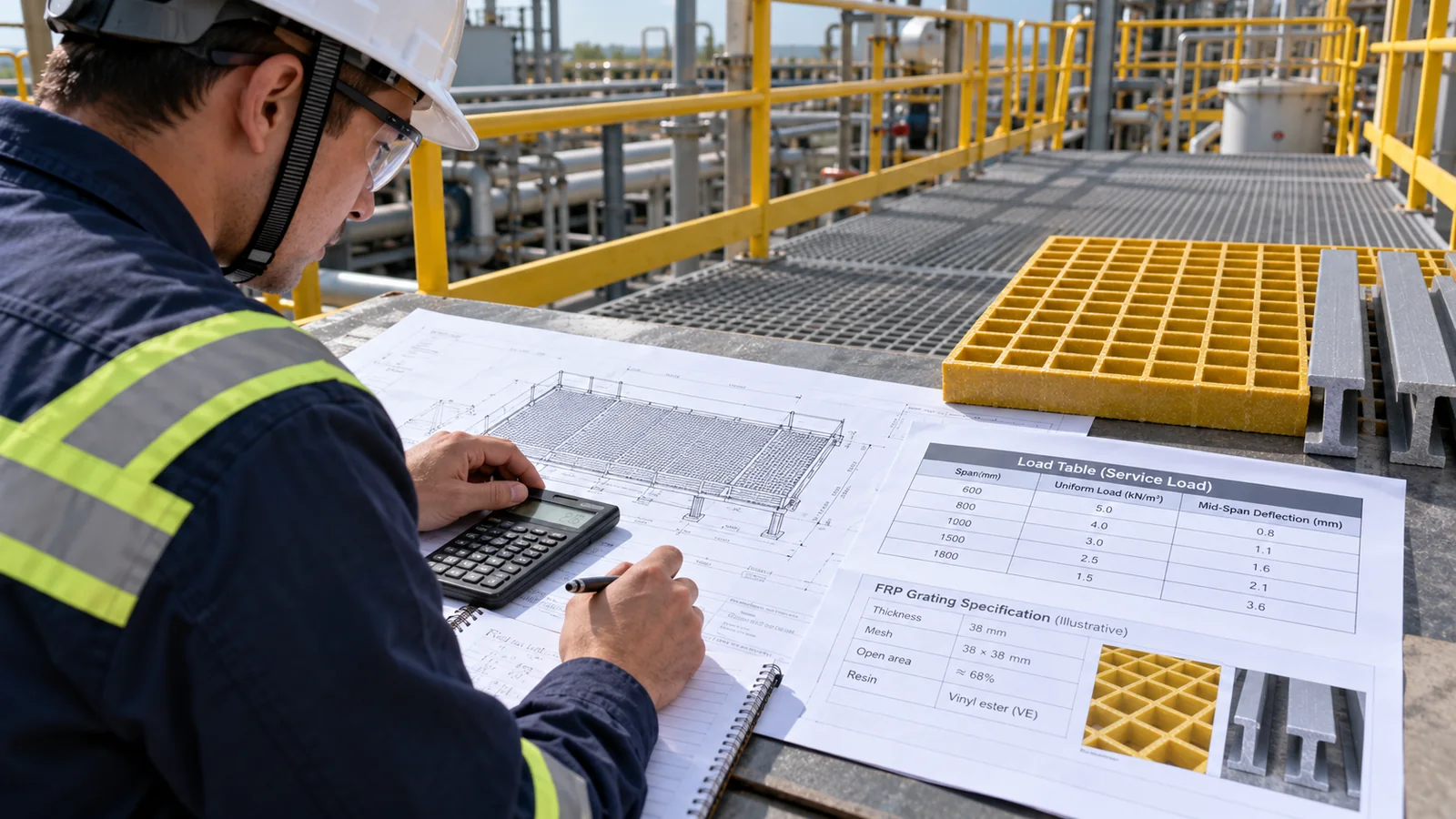
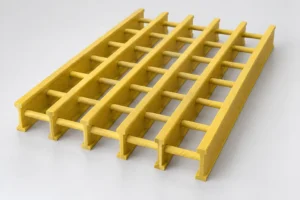
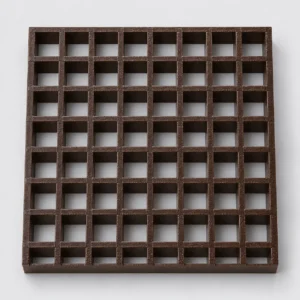
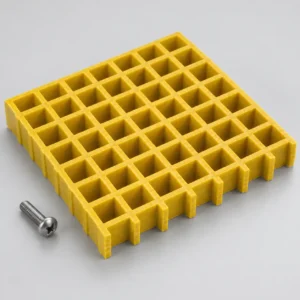
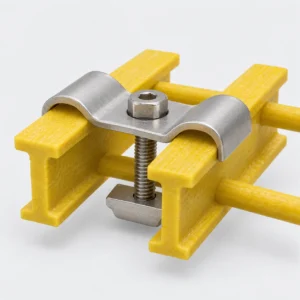

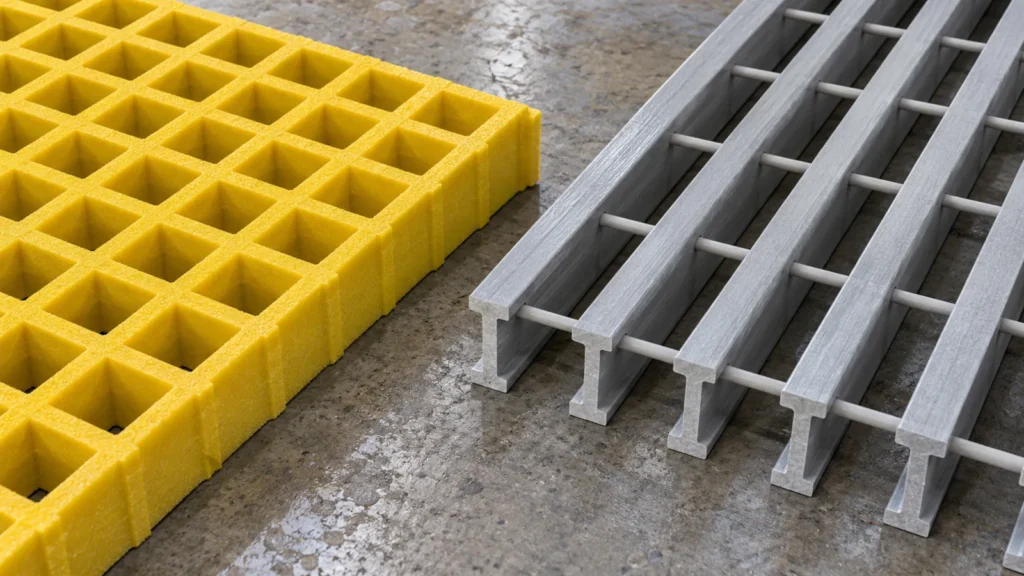
Pultrusion makes long profiles with a constant cross-section, and molding forms panels and shapes inside a mold. Choose pultruded for long spans and structural shapes, and molded for grating panels that carry load in both directions. Machs runs both processes, so the choice follows the product, not the plant.
This page explains how each process works and how to pick between them. For the full pultrusion technical background, see the Machs pultrusion process guide.
How Pultrusion Works
In pultrusion, fiberglass mat and roving are soaked in a liquid resin mixture and pulled through a heated steel die by a continuous pulling device, and the heat of the die cures the resin into a finished profile.1
- 01Mat and roving
- 02Resin bath
- 03Heated steel die
- 04Continuous puller
- 05Cut to length
Because the process runs continuously, it makes constant-section shapes in long lengths, and the fibers run mainly along the length of the part. A new shape needs a new die, which is how custom pultrusion works.
How Molding Works
In molding, layers of glass reinforcement and resin are laid in a mold and cured, so the part takes the shape of the mold. For grating, this produces a panel with an integral grid that carries load in two directions.
- 01Glass in the mold
- 02Resin added
- 03Cured in the mold
- 04Panel removed
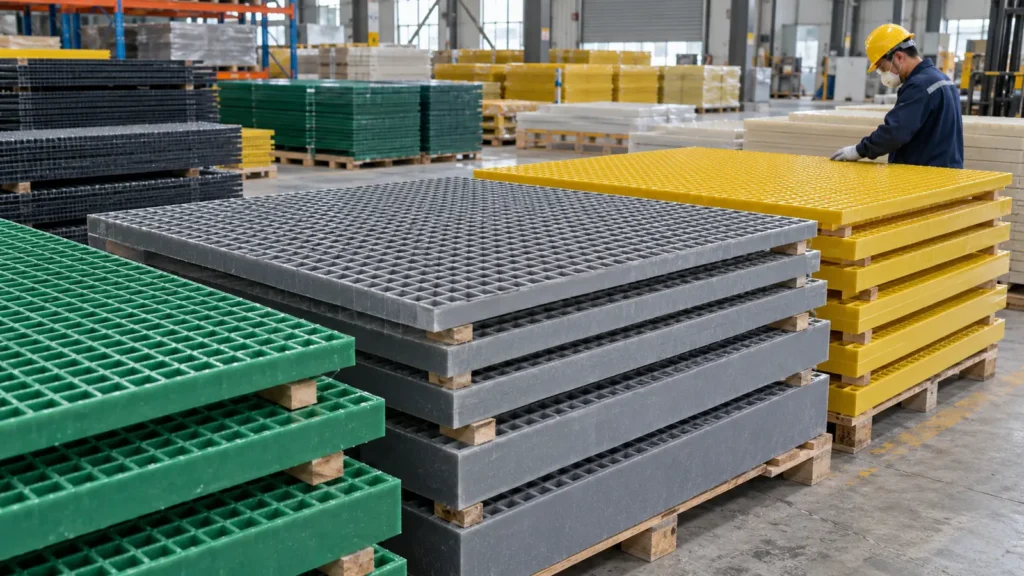
Pultrusion vs Molding Compared
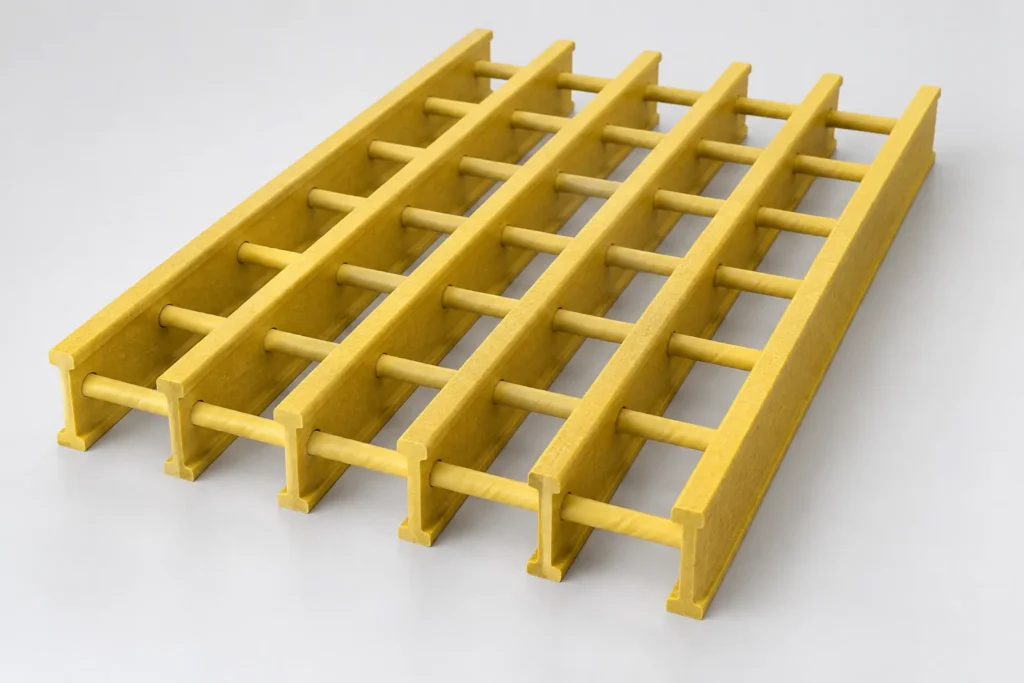
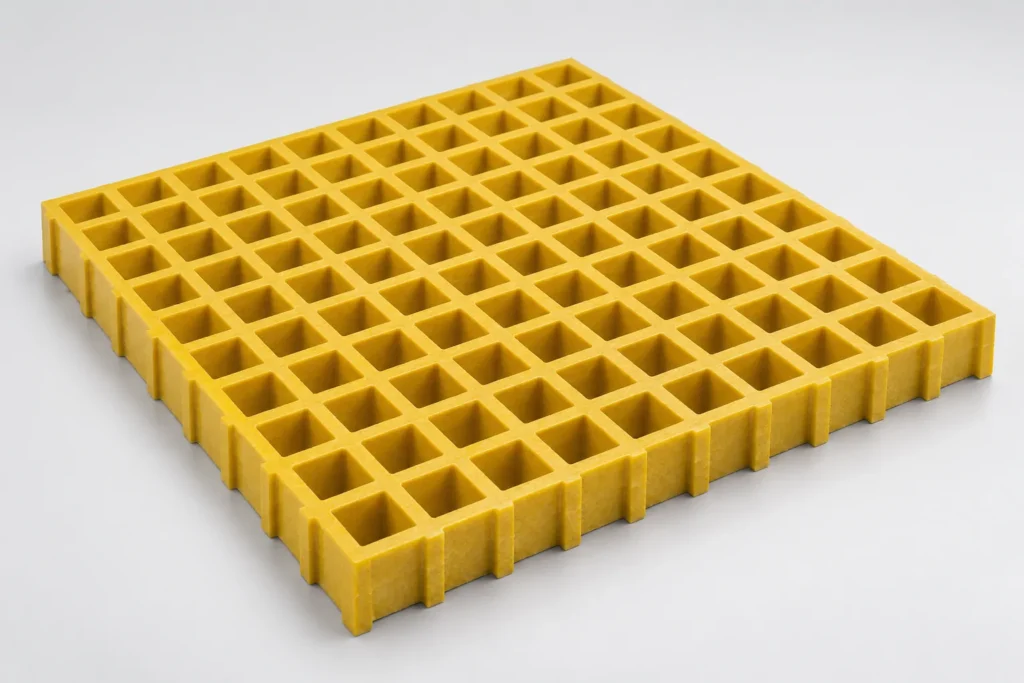
| Pultrusion | Molding | |
|---|---|---|
| Shape | Constant cross-section | Shape set by the mold |
| Length | Continuous, cut to length (up to about 12 m) | Limited to the mold size |
| Fiber direction | Mainly along the length | Grid of fibers in both directions |
| Fiber content | Typically 45 to 60 percent by volume for profiles2 | Available on request |
| New shape | New die | New mold |
| Machs products | Pultruded grating, profiles, rebar, handrails | Molded grating |
Which Process Should You Choose
- Long members and structural shapesBeams, channels, angles, tubes and rods: pultruded FRP profilesPultrusion
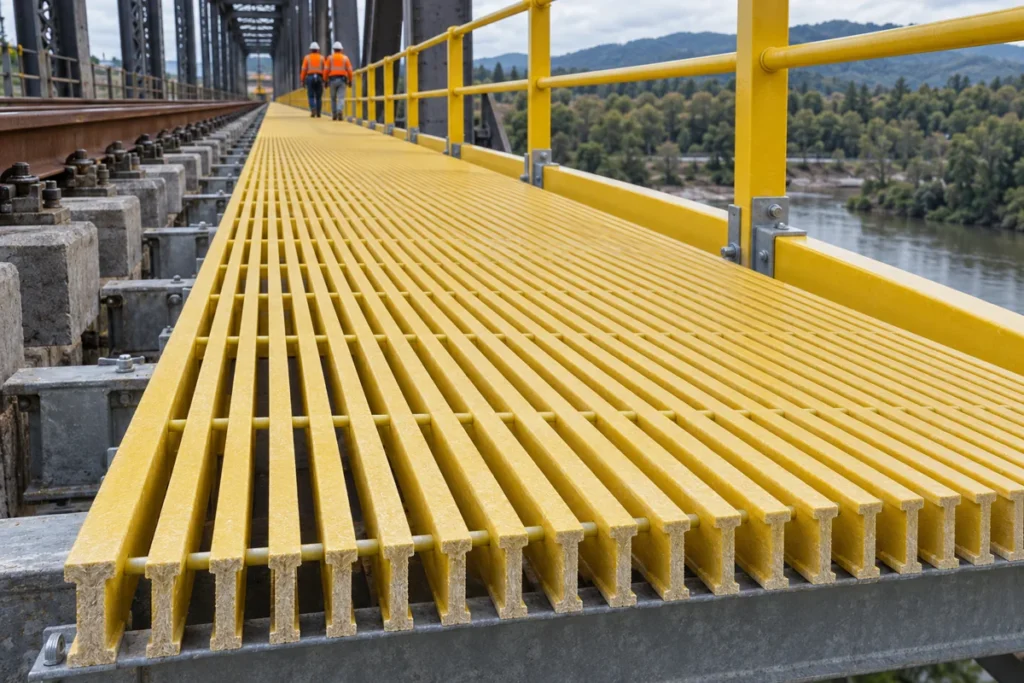
- Grating for a long clear span in one directionPultruded grating, with panels up to about 12 mPultrusion
- Load in both directions or irregular layoutsGrating that must carry load both ways: molded gratingMolding
- A section nobody stocksCustom pultrusion on a new diePultrusion
Not sure? Send the span, load and layout through the contact page, and Machs will recommend the process.
Questions About the Processes
Is pultruded stronger than molded?
Each is strongest in the direction of its fibers, so compare them for your load direction, not in general.
Can both be fire-rated or slip-resistant?
Both depend on resin and surface. See fire and slip performance.
What does resin change?
Chemical resistance and temperature. See the resin guide.
Sources
- Strongwell, Key Properties of Fiber Reinforced Polymer
- F1 Composite, Pultruded FRP Profiles (manufacturer reference values)