

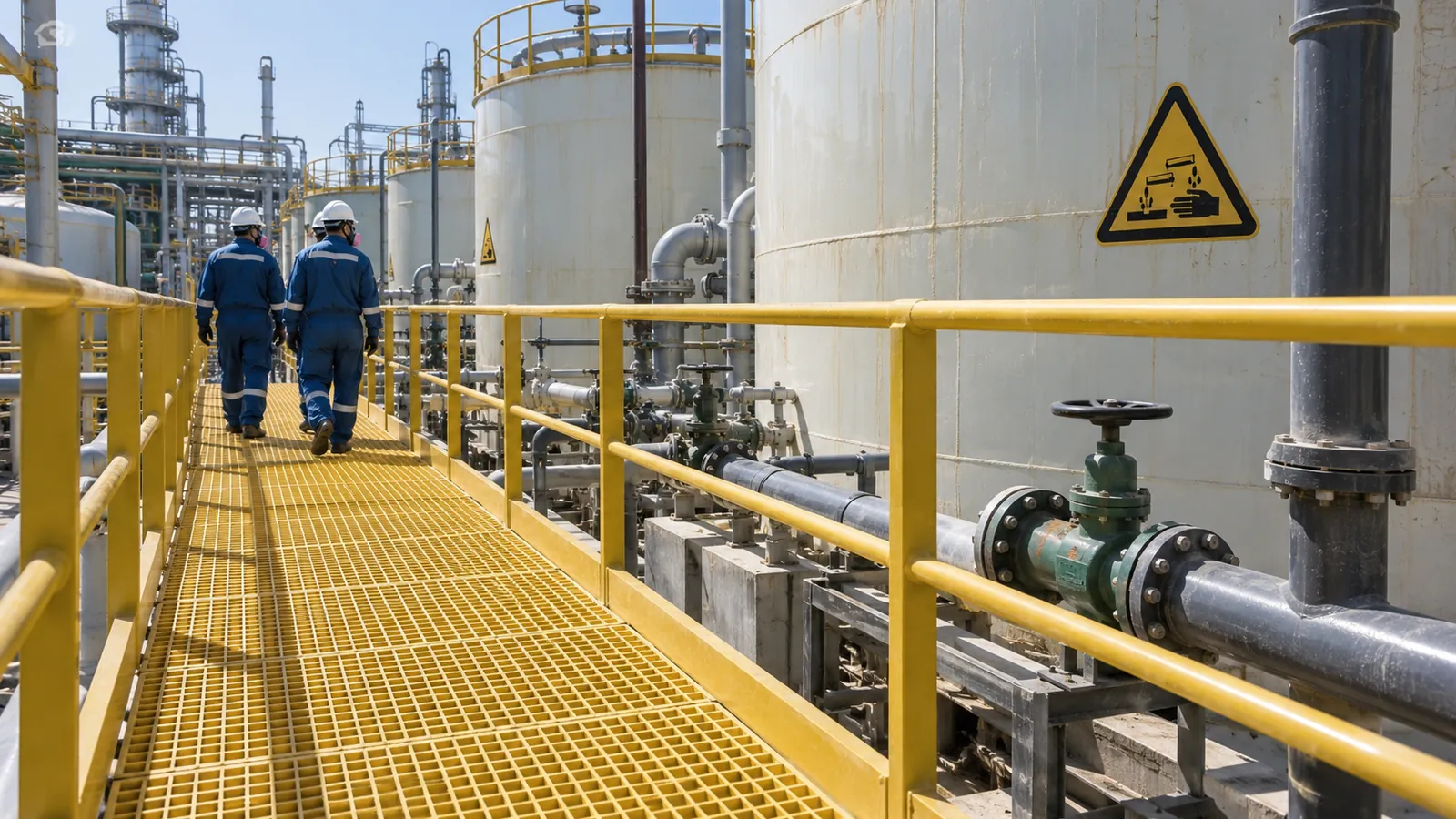
FRP grating’s chemical resistance comes from its resin system. Vinyl ester is used for heavy chemical exposure such as strong acids and alkalis, isophthalic polyester for general industrial and water-treatment exposure, and orthophthalic polyester for light corrosion. Within each resin, the result still depends on the chemical, its concentration, its temperature and how the grating is exposed. This page explains how MACHS matches resin to chemicals, and what information you need to send for a reliable recommendation.
Key Takeaways
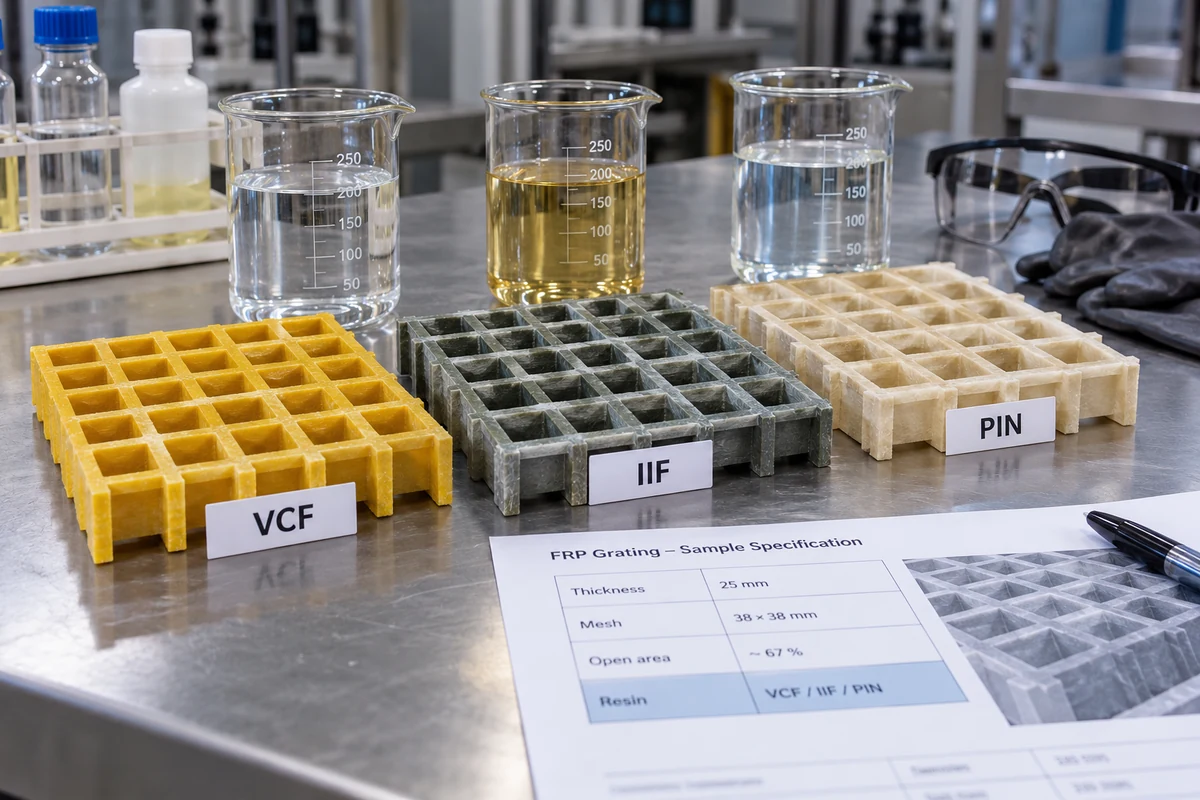
- MACHS offers six resin systems: VCF vinyl ester, IIF isophthalic, IFF isophthalic food-grade, PIN phenolic, and OAF / OAG orthophthalic.
- Specify for the worst exposure on the platform, such as splash zones and spill areas, not the average.
- Concentration and temperature can change the answer for the same chemical, so always state both.
- Cut edges must be sealed in chemical areas, or fluids can wick into the panel.
Which resin suits which environment?
| Code | Resin system | Service environment | Typical uses |
|---|---|---|---|
| VCF | Vinyl ester | Heavy chemical corrosion | Acid and alkali handling, plating, chemical process areas, mineral processing |
| IIF | Isophthalic polyester | General industrial corrosion | Water and wastewater treatment, marine walkways, power plants |
| IFF | Isophthalic, food-grade system | General industrial corrosion in food processing areas | Food and beverage plants |
| PIN | Phenolic | General industrial corrosion where fire behaviour is critical | Offshore platforms, tunnels, enclosed spaces |
| OAF | Orthophthalic polyester | Light corrosion | Light industry, landscaping |
| OAG | Orthophthalic polyester | General building use | Building walkways, rooftops, dry areas |
The resin is chosen per area, not per plant. A wastewater plant might use IIF on open walkways and VCF over chemical dosing points. See our guide to replacing grating in wastewater plants.
Why do concentration and temperature matter so much?
Chemical attack on resin speeds up with both concentration and temperature. A resin that handles a dilute solution at ambient temperature can fail with the same chemical when it is concentrated or hot. That is why “resistant to sulphuric acid” means little until you add how strong and how hot.
- Concentration: state the percentage, and the highest it can reach, for example in a spill.
- Temperature: state the normal and the maximum temperature of the fluid and the air.
- Exposure type: fumes, occasional splash, regular wash-down and constant immersion are very different duties. Grating is usually in fumes and splash, not immersion.
- Mixtures: list every chemical present, including cleaning agents used on the floor.
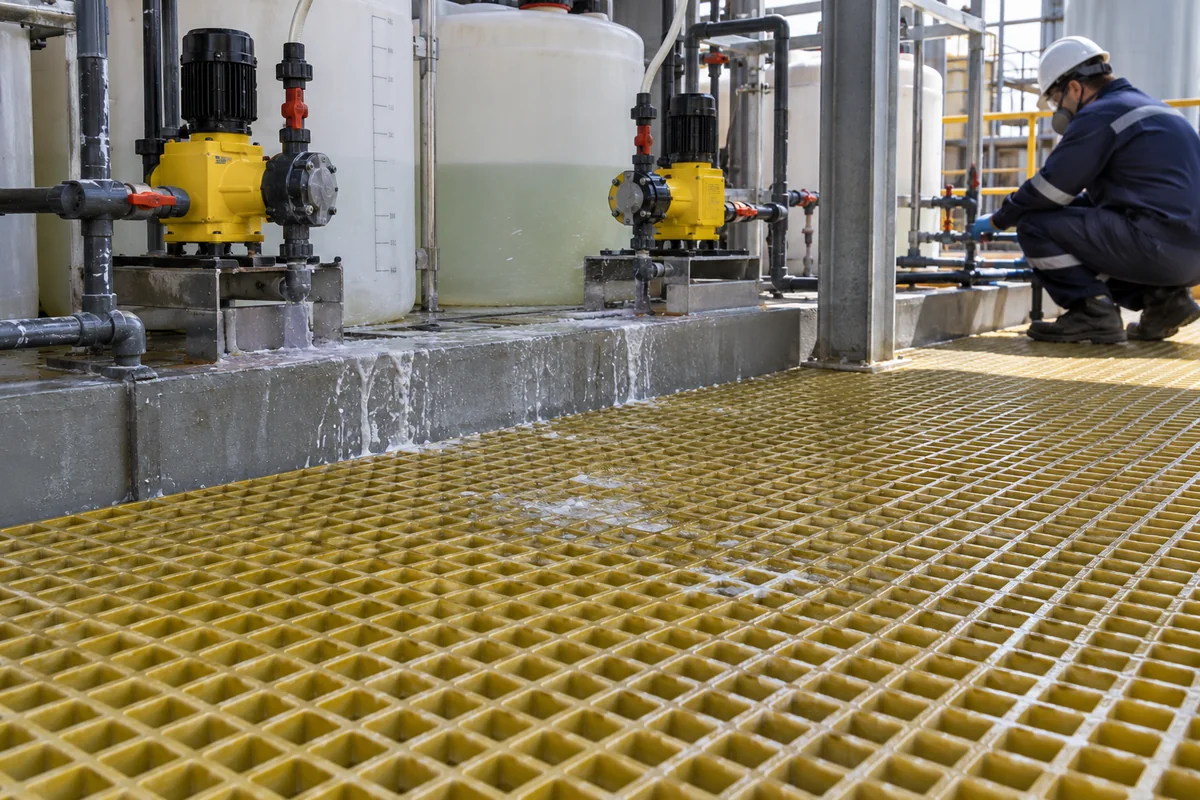
What information should you send for a resin recommendation?
Send this list with your enquiry and we can recommend a resin system for each area:
- Chemical names, with CAS numbers if available
- Concentration, normal and maximum
- Fluid and air temperature, normal and maximum
- Exposure type: fumes, splash, wash-down or immersion
- Indoor or outdoor (UV exposure)
- Any fire requirement for the same area
How is chemical resistance tested?
Two standards are widely used for thermoset resins and plastics:
- ASTM C581 covers the chemical resistance of thermosetting resins used in glass-fibre-reinforced structures for liquid service. Laminates are exposed to the chemical, and changes in hardness, flexural strength and appearance are measured.
- ASTM D543 covers the resistance of plastics to chemical reagents in general.
A simple site test follows the same idea: immerse sample pieces in the actual fluid at the actual temperature, then compare their surface, weight and hardness with unexposed pieces. Barcol hardness, measured to ASTM D2583, is a quick indicator of resin softening.
What else affects chemical performance besides the resin?
- Cut edges: every cut exposes fibre ends. Seal them with resin, including cuts made on site. See how to cut fiberglass grating.
- Fixings: metal clips can corrode before the grating does. Choose clip materials for the same environment. See our grating clips guide.
- Supporting steel: FRP grating on corroding steel beams still fails. Check the supports too.
- Housekeeping: washing off spills limits concentration build-up on the surface.
Is food-grade or phenolic grating chemically different?
Yes, in purpose more than in resistance:
- IFF food-grade system: an isophthalic system for food processing areas. If your project requires a specific food-contact certification, state it in the enquiry so we can confirm what documentation applies.
- PIN phenolic: chosen for fire behaviour in offshore and enclosed spaces, with general industrial corrosion resistance. For hydrocarbon fire risks, see our guide to fire-rated grating offshore.
Send your chemical list, concentrations and temperatures. We recommend a resin system for each area of your plant.
Send your chemical list →Frequently Asked Questions
Is FRP grating resistant to all chemicals?
No. Resistance depends on the resin, the chemical, its concentration and temperature. Strong oxidisers, some solvents and hot concentrated chemicals need careful checking even with vinyl ester.
Is vinyl ester always the safest choice?
It is the most chemically resistant of our systems, but it costs more. On dry or mildly corrosive walkways, isophthalic or orthophthalic resin does the job at lower cost.
Does molded or pultruded grating resist chemicals better?
The resin decides chemical resistance, not the grating type. Both can be specified in the resin your environment needs. See molded vs pultruded FRP grating.