

Short Answer
In wastewater plants, hydrogen sulfide (H₂S) and wet, acidic conditions attack aluminum and steel grating. FRP grating resists this corrosion, so it is the usual replacement over channels, clarifiers, headworks and odor-controlled areas. In most cases it can go onto the existing support steel after the supports are checked.
Key Takeaways
- H₂S from wastewater is a major cause of corrosion in collection and treatment systems (U.S. EPA).
- Aluminum grating costs less than stainless steel but is vulnerable to H₂S attack.
- Use vinyl ester resin in the most aggressive areas and isophthalic in milder ones.
- Compare materials on life-cycle cost: purchase, replacements and downtime.
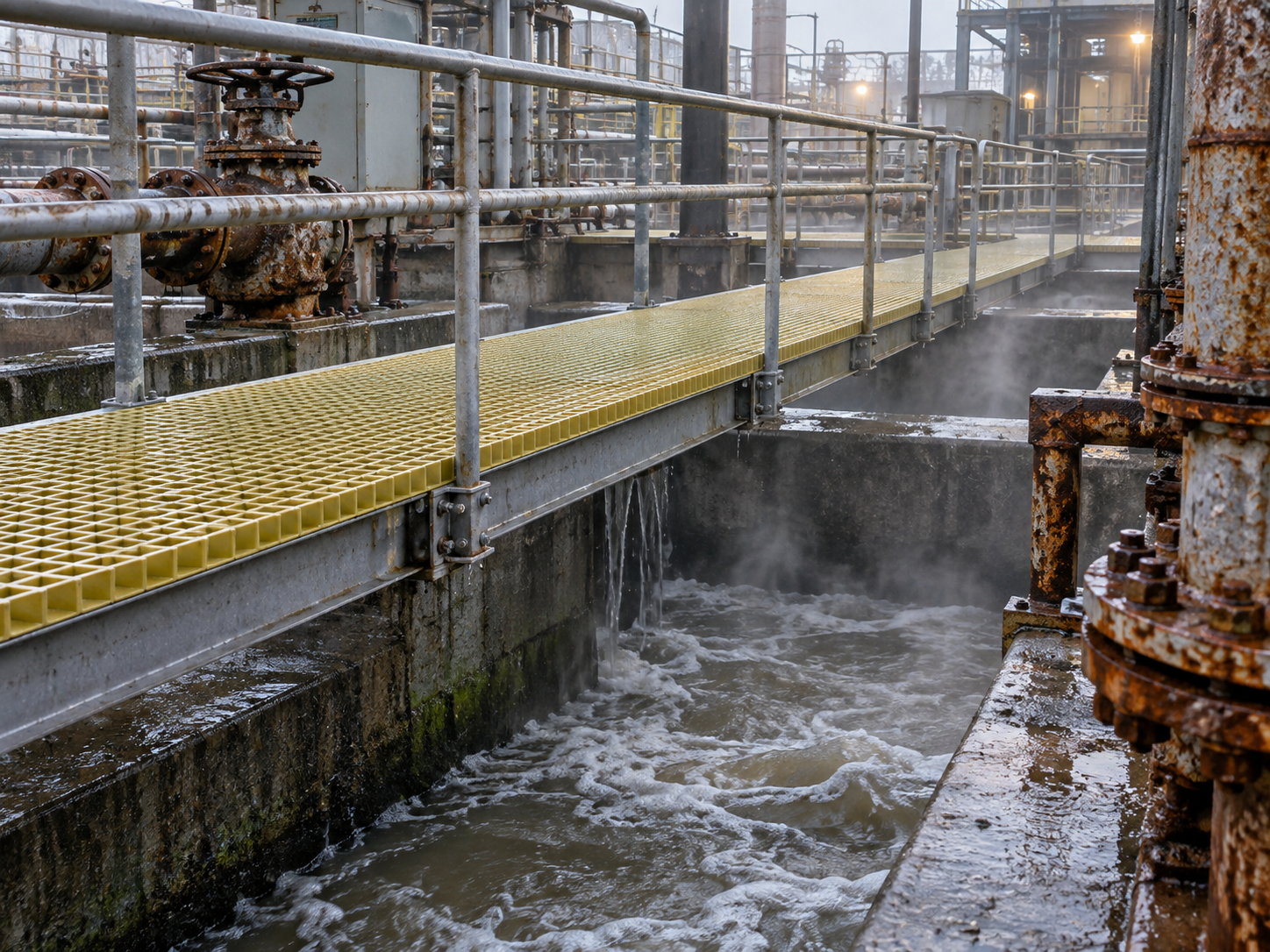
Why does grating corrode so fast in wastewater plants?
Sulfide in wastewater becomes H₂S gas. Bacteria on damp surfaces then turn the H₂S into sulfuric acid, which attacks metal and concrete. The U.S. EPA reported H₂S corrosion as a serious, costly problem in both collection and treatment systems (EPA Report to Congress).
- Worst areas: headworks, grit chambers, covered channels, wet wells and sludge handling.
- Why covers make it worse: odor covers trap H₂S and moisture right under the grating.
- Typical damage: pitting, thinning bearing bars and failed welds.
How do aluminum, steel and FRP compare in wastewater service?
Engineers discussing grating for wastewater plants note that aluminum is cheaper than stainless steel but vulnerable to H₂S (Eng-Tips). FRP avoids the corrosion problem altogether.
| Material | H₂S / acid resistance | Weight | Main drawback |
|---|---|---|---|
| Galvanized steel | Poor once the coating is gone | Heavy | Rusts; heavy to lift for access |
| Aluminum | Vulnerable to H₂S | Light | Pitting and thinning in aggressive zones |
| Stainless steel | Good | Heavy | High purchase cost |
| FRP (vinyl ester) | Very good | Light | Needs a correct span design (more flexible than metal) |
For a detailed material comparison, see FRP vs steel grating.
Which FRP resin should you use?
Match the resin to the exposure.
- Vinyl ester: headworks, covered channels, odor control and chemical dosing areas.
- Isophthalic polyester: open walkways and general areas with milder exposure.
- Fire-retardant grades: where the building code or owner requires a flame spread rating.
How do you retrofit FRP onto existing supports?
Check the supports first, then size the FRP to the span you actually have.
- Inspect the support steel. Replace corroded angles or embeds, or the new grating will not be safe.
- Measure clear spans. FRP bends more than metal, so it may need a taller bar or pultruded grating at the same span.
- Match the top level. Keep the finished floor flush to avoid trip edges.
- Use corrosion-resistant clips. Stainless steel hold-downs, spaced to the supplier’s drawing. See grating clips.
- Seal every cut edge with resin so moisture cannot enter the glass fibers.
Is FRP cheaper over the life of the plant?
Often yes in aggressive areas, because FRP is replaced less often and needs no coating. Build the comparison on your plant’s real costs:
- Purchase and installation cost for each material
- Expected replacement cycle in your exposure
- Maintenance: coating, inspection and repairs
- Downtime and the cost of closing process areas
See how importers build this calculation in FRP grating landed cost.
FAQ
Can FRP grating be lifted for access to channels?
Yes. FRP panels are much lighter than steel, which makes access openings easier and safer to handle.
Does FRP grating need painting in wastewater plants?
No. The color goes all the way through the resin, and the material does not rust.
Is FRP safe near electrical equipment in plants?
FRP is non-conductive, which is an added safety benefit around pumps and control panels.
Replace corroded grating
Send us photos, spans and the area type. We will recommend resin, height and clips. See our water infrastructure solutions or contact us.