

If you are working with FRP (Fiberglass Reinforced Plastic), the best screw option is stainless steel screws, especially grade 304 for general environments and grade 316 for marine or highly corrosive conditions. Other useful options include self-tapping and self-drilling screws for easier installation, pan head screws with washers for load distribution, and nylon screws for lightweight or chemical-resistant applications.
This guide explains why these screw types are most suitable for FRP, and what to consider when installing them.
Key Factors to Consider
FRP is a composite material that behaves differently from metals or wood. Improper screw selection can cause cracking, loosening, or premature wear. The most important factors to consider include:
Corrosion resistance, especially for outdoor or marine environments.
Load-bearing strength, since FRP installations may face heavy or constant loads.
Ease of installation, because pre-drilling can be time-consuming.
Stress distribution, to prevent local cracking during fastening.
Best Screw Types for FRP
Stainless Steel Screws
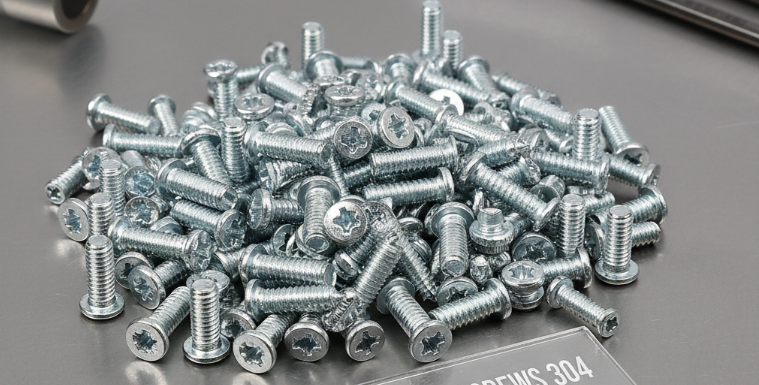
Stainless steel screws are the most universal choice. Grade 304 is suitable for everyday environments, while grade 316 provides superior performance in salty or corrosive conditions. Their smooth finish reduces stress concentration on FRP and ensures long service life.
Self-Tapping Screws
Self-tapping screws are designed to cut threads directly into FRP material without requiring pre-tapping. They provide a firm fit and help avoid delamination, making them ideal for medium-duty connections.
Self-Drilling Screws
Self-tapping screws are designed to cut threads directly into FRP material without requiring pre-tapping. They provide a firm fit and help avoid delamination, making them ideal for medium-duty connections.
Pan Head or Flat Head Screws
For panels, gratings, or sheet installations, pan head and flat head screws are widely used. When combined with washers, they spread the load across a wider area, reducing local stress and extending the service life of FRP structures.
Nylon Screws
Nylon screws are lightweight, corrosion-proof, and chemically resistant. They are a good choice for non-structural or specialized applications, such as electrical or chemical equipment. However, they are not suitable for heavy loads.
Best Practices for Installation
Even with the right screw type, proper installation is essential. Pre-drill pilot holes slightly larger than the screw core to reduce cracking risks. Avoid overtightening, as excessive torque can damage FRP surfaces. In high-vibration environments, use washers or thread-locking adhesives to maintain stability.
Conclusion
The best screw for FRP depends on your application:
For outdoor or marine projects → stainless steel 316 screws.
For quick and efficient installation → self-tapping or self-drilling screws.
For panels or gratings → pan head or flat head screws with washers.
For lightweight or chemical-resistant needs → nylon screws.
By choosing the right screw type and following proper installation practices, you can ensure that FRP structures remain secure, durable, and long-lasting.