

Contents
Choose FRP profiles by matching the section shape to the load direction: I-beams for strong bending in one direction, channels for framing and edge members, angles for bracing and connections, and square tubes for columns and multi-directional loads. Verify with section properties and load tables.
The Short Answer
Pultruded FRP profiles are structural shapes — channels, I-beams, angles, tubes — made of glass fiber in a polymer resin, used where steel corrodes or where non-conductivity and light weight matter. As a class of fibre-reinforced plastic, they combine the corrosion resistance of the resin with the strength of the glass. Selection is governed by the same logic as steel design but with two twists: FRP has a lower elastic modulus (about a quarter of steel), so deflection often governs, and its strength is anisotropic — along the profile axis is strong, across it is weaker. The section shape choice follows the load path: bending, compression, bracing, or multi-directional.
What FRP Structural Profiles Are
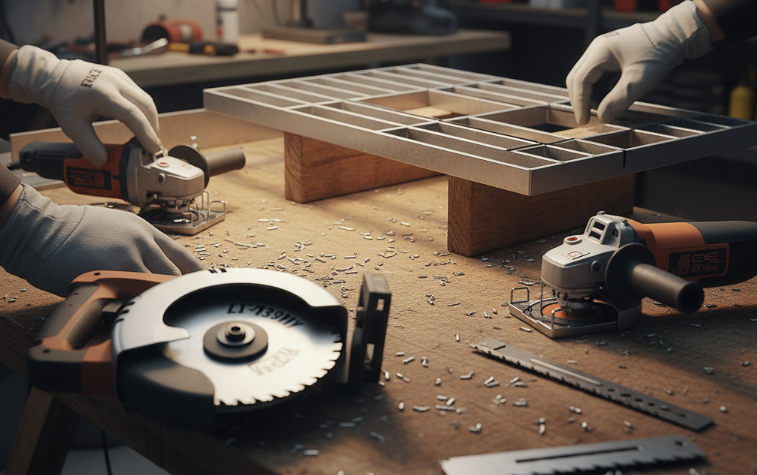
Profiles are pultruded in continuous lengths with constant cross-sections, typically in isophthalic polyester, vinyl ester, or fire-retardant resin, with surface veils for UV protection. Standard shapes mirror steel sections, allowing familiar structural design. Key differences from steel: weight is ~1/4, elastic modulus ~40-60 GPa vs 200 GPa, and no yield point — FRP is linear-elastic to failure. Design guidance (such as ASTM D4385 for inspection and pultruded product standards) supports consistent quality verification.
Section Properties & Design
Every profile has published section properties: area (A), moment of inertia (I), section modulus (S), and radius of gyration (r) — the same values used in steel design. Design checks include bending stress, shear, deflection, and buckling for compression members. Because FRP’s modulus is low, deflection (span/180 to span/240 is common) usually governs over stress, and compression members need buckling checks with reduced allowable values. Always work from the manufacturer’s published properties and allowable stress values — do not scale steel tables.
Channels (C-Sections)
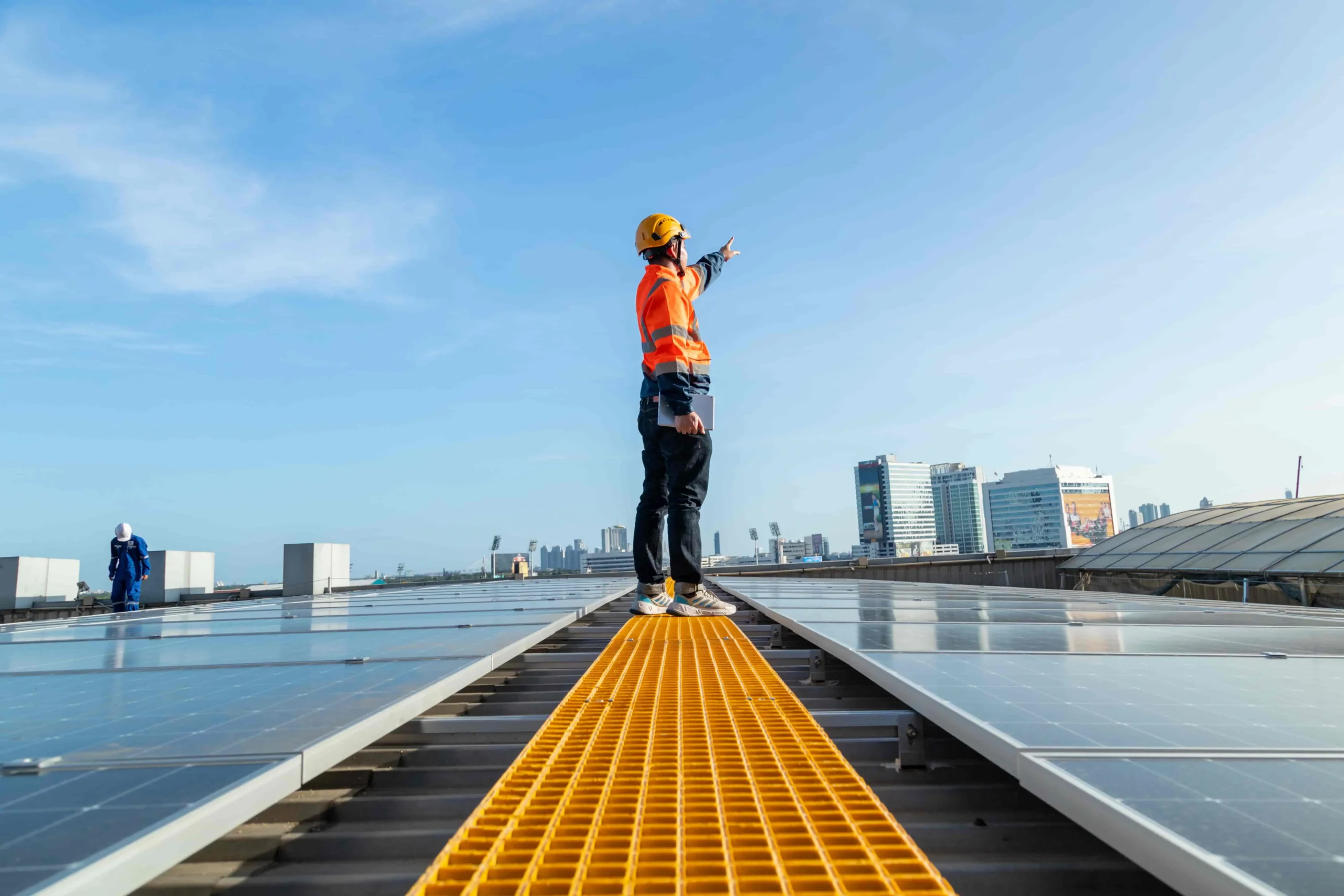
Channels have a flat web with two flanges on one side — efficient for framing, edge members, and load carried in the plane of the web. They are common in handrail posts, equipment frames, and edge stiffening. Channels are strong in bending about the axis through the web, weaker about the other axis — orient them so the load is in the strong plane. They also make practical connection points because the open face allows access for bolts and adhesives.
I-Beams
I-beams concentrate material in the flanges to maximize bending strength about the strong axis — the classic beam shape for long spans. Use I-beams where a beam carries bending across a span: walkway supports, platform stringers, and heavy equipment frames. Their weakness is torsion and weak-axis bending; they need lateral restraint (bracing) to prevent lateral-torsional buckling under load, just like steel.
Angles
Angles (L-sections) have two legs at 90° — light, economical, and used for bracing, stiffening, and connections. They are not efficient as primary bending members but excel as cross-bracing in frames, edge stiffeners on panels, and connection brackets. Angles also handle combined loads as tension/compression members well and are the most common profile for small custom fabrications.
Square & Rectangular Tubes
Square and rectangular tubes enclose the section, giving high torsional stiffness and equal bending strength in both directions. Tubes are the best choice for columns, posts, and multi-directional frames — handrail posts, equipment stands, and space frames — because they resist buckling in any direction and handle torsion. Their closed shape also sheds water and dirt better, which helps outdoor longevity.
Profile Comparison Table
| Profile | Best Load Mode | Typical Use | Notes |
|---|---|---|---|
| Channel | Bending (strong axis) | Frames, edge members, handrail posts | Open face aids connections |
| I-Beam | Bending (long spans) | Walkway supports, platform stringers | Needs lateral bracing |
| Angle | Bracing, tension/compression | Cross-bracing, stiffeners, brackets | Light and economical |
| Square Tube | Compression, torsion, 2-axis bending | Columns, posts, frames | Buckling-resistant, self-draining |
How to Choose
- Long-span bending → I-beam with lateral bracing.
- Frames and edge members → channels, oriented in the strong plane.
- Bracing and connections → angles.
- Columns, posts, torsion → square or rectangular tubes.
- Combined use → verify each member against the load table, then connect per FRP joint design guidance (bolted, bonded, or hybrid).
FAQ
Which FRP profile is strongest?
It depends on the load direction. I-beams are strongest in strong-axis bending; square tubes resist compression and torsion best; angles excel in bracing. Strength is a property of the section and its orientation.
Can FRP profiles replace steel beams?
Yes, where the load allows — FRP is ~1/4 the weight and corrosion-proof, but with lower stiffness, deflection governs. Section sizes are usually larger than steel for the same load, and buckling must be checked.
What is the difference between channel and I-beam?
A channel has a web with two flanges on one side (open face), strong in one plane and easy to connect. An I-beam has flanges on both sides, maximizing strong-axis bending for long spans.
Are FRP square tubes good for columns?
Yes — tubes resist buckling in all directions and handle torsion, making them the preferred column and post section in FRP frames.
How do I find the right FRP profile size?
Calculate your load, span, and deflection limit, then compare against the manufacturer’s published section properties and load tables. Request the supplier’s data sheet rather than approximating from steel tables.
FRP Profiles with Published Section Data
Sources: Wikipedia – Pultrusion; ASTM International.