

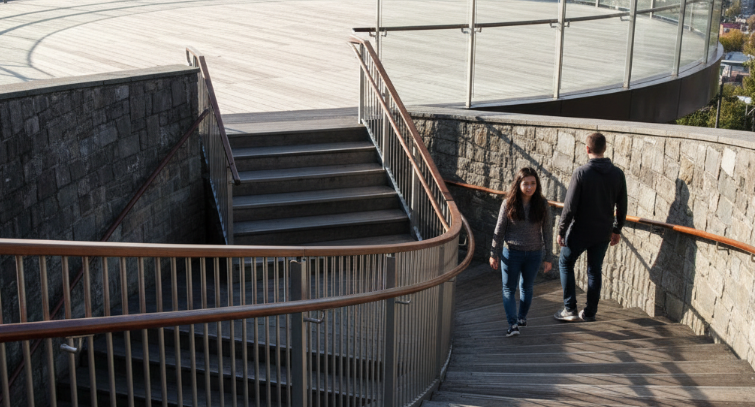
Walk up a staircase, and you’ll hold a handrail.
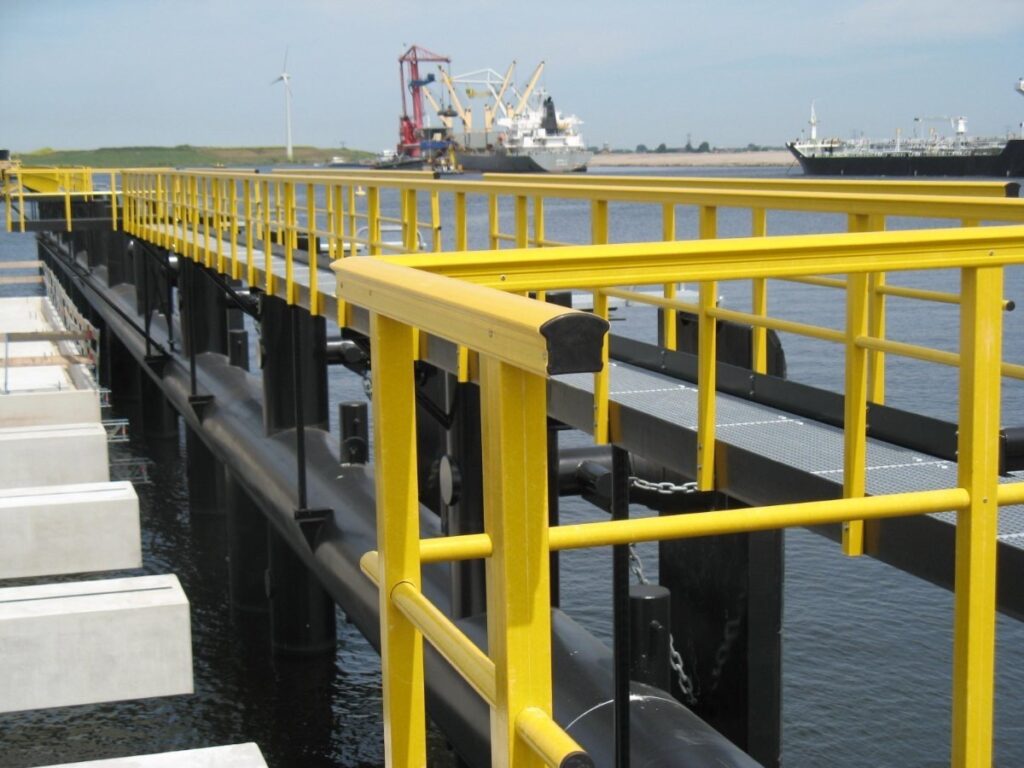
Stand on a balcony or work platform, and you’ll be protected by a guardrail.
They look similar, but they do very different jobs. Handrails help you stay steady. Guardrails stop you from falling.
What Is a Handrail?
A handrail is meant for your hands. It’s the bar you grip when going up stairs or down ramps.
It helps with balance and guidance. Elderly people, kids, or anyone carrying loads rely on it for safety.
Handrails are installed at arm height. They are smooth, continuous, and comfortable to hold. Think of them as your “walking partner” when you need support.
What Is a Guardrail?
A guardrail is not for holding. It’s a protective barrier that keeps you from going over the edge.
You see them on balconies, rooftops, bridges, and industrial walkways.
Guardrails are taller, stronger, and designed to take impact. They act as the last line of defense against falls.
Key Differences
The function is the biggest difference:
Handrails = support.
Guardrails = protection.
Handrails are lower, around 34–38 inches, set at hand level.
Guardrails are higher, about 42 inches or more, creating a barrier.
One guides you as you move. The other shields you from danger.
Where They’re Used
Handrails show up on stairs, ramps, and hallways.
Guardrails belong anywhere with a fall risk — balconies, platforms, rooftops.
Often, you’ll see them together. A staircase, for example, may have a handrail to hold onto and a guardrail on the side.
They work as a team: one gives you balance, the other keeps you safe.
OSHA Standards You Should Know
OSHA has clear rules for workplace guardrails.
Fall protection: OSHA 1910.28 requires guardrails when there’s a fall risk of 4 feet (1.2 m) or more.
Height: OSHA 1910.29 sets the top rail at 42 inches (106 cm), plus or minus 3 inches (7.6 cm), with a midrail halfway down.
Strength: Guardrails must handle 200 pounds of force, downward or outward, at any point on the top rail.
In plain words: guardrails must be tall enough, strong enough, and built right.
If you’re unsure, consult professionals. Meeting code isn’t just about compliance — it’s about saving lives.
Conclusion
Handrails and guardrails may look alike, but their jobs are very different.
Handrails steady your steps. Guardrails protect your life.
Both matter in safe design. And when installed correctly, they work together to keep people safe, every single day.