

If fiberglass is the skeleton of FRP, the resin is the muscle. The resin matrix binds the fibers together, transfers loads between them, protects them from environmental attack, and determines many of the composite’s key properties — especially chemical resistance and fire performance.
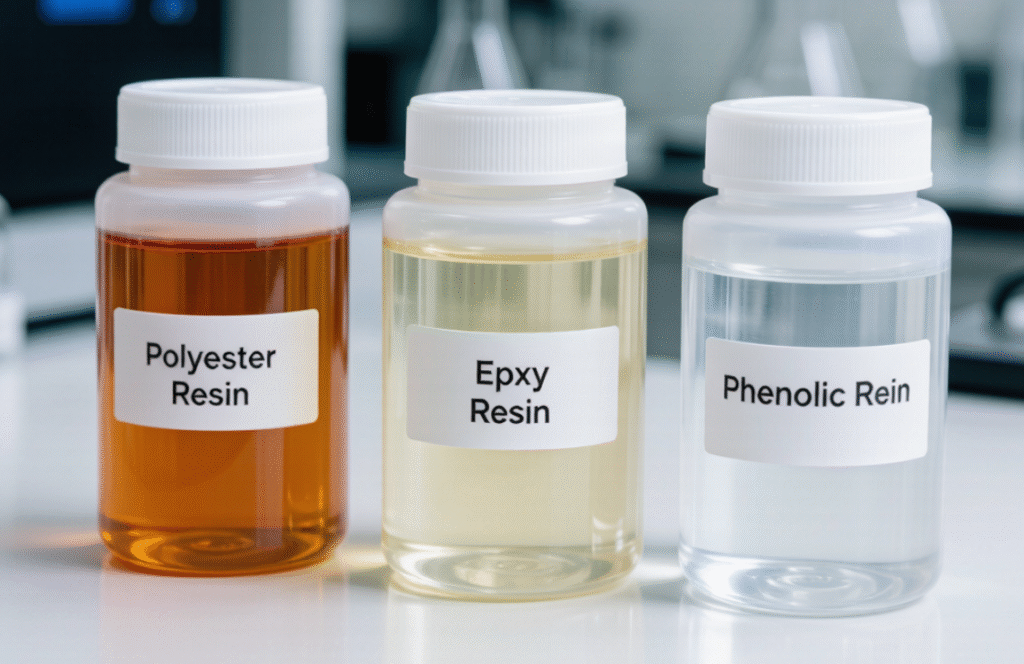
Three resin systems dominate the FRP industry: unsaturated polyester, epoxy, and phenolic. Each has distinct characteristics that make it suitable for specific applications. This guide explains the differences and helps you choose the right one.
The Role of Resin in FRP
Key insight: While the fiberglass provides strength and stiffness, the resin determines the composite’s durability. A wrong resin choice can cause premature failure even with perfect fiber placement — especially in corrosive or high-temperature environments.
The resin performs four critical functions in an FRP composite:
- Binding: Holds fibers together in the desired shape
- Load transfer: Transfers stress between fibers
- Protection: Shields fibers from chemical, moisture, and UV attack
- Formability: Allows the composite to be shaped before curing
Resin selection is guided by industry standards including those from the American Composites Manufacturers Association (ACMA), which provides guidelines for material selection in structural composite applications.
Unsaturated Polyester Resin
Unsaturated polyester resin is the workhorse of the FRP industry. It accounts for roughly 75% of all resin used in glass fiber composites globally. It offers an excellent balance of mechanical properties, chemical resistance, and low cost.
Key advantages: Low cost ($2-4/kg), room temperature curing, good mechanical properties, excellent chemical resistance in standard environments, easy to process.
Limitations: Higher shrinkage during cure (5-8%), lower elongation than epoxy, sensitive to UV degradation without protective coating.
Variants: Orthophthalic (standard grade), isophthalic (improved water and chemical resistance), vinyl ester (bridges the gap between polyester and epoxy for enhanced corrosion resistance).
Epoxy Resin
Key takeaway: Epoxy resin is the premium choice for high-performance FRP. Its superior mechanical properties, excellent adhesion, and low shrinkage make it the resin of choice for aerospace, marine, and structural strengthening applications — at a cost of 2-4x polyester.
Key advantages: Superior mechanical strength (tensile strength 60-80 MPa at resin level), very low shrinkage (1-3%), excellent adhesion to fibers and substrates, superior chemical and moisture resistance, longer service life.
Limitations: Higher cost ($8-15/kg), requires precise mixing ratios, longer cure times, potential skin sensitization for workers.
Phenolic Resin
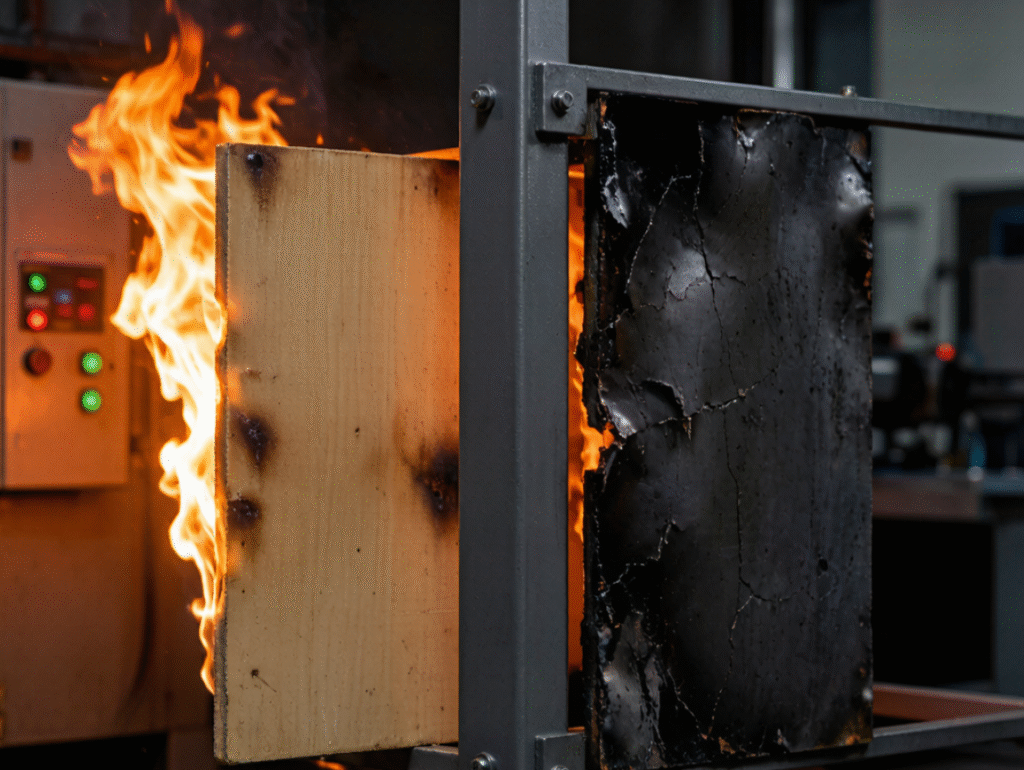
Phenolic resin is the specialist in the family. Its outstanding fire performance — very low flammability, minimal smoke emission, and no toxic fumes — makes it the mandatory choice for applications where fire safety is critical.
Key advantages: Exceptional fire resistance (Class 1 / Class 0), very low smoke density, self-extinguishing, excellent thermal stability up to 250°C, good chemical resistance.
Limitations: Dark color (usually black or dark brown), more brittle than polyester, requires higher curing temperatures, more difficult to process.
Critical applications: Offshore oil and gas platforms, tunnel infrastructure, mining ventilation systems, public transportation components, building fire escape routes.
Comparison Table
| Property | Polyester | Vinyl Ester | Epoxy | Phenolic |
|---|---|---|---|---|
| Relative cost | 1x | 1.5–2x | 2–4x | 1.5–2x |
| Tensile strength (resin) | 40–60 MPa | 50–70 MPa | 60–80 MPa | 40–55 MPa |
| Cure shrinkage | 5–8% | 4–6% | 1–3% | 2–4% |
| Chemical resistance | Good | Excellent | Excellent | Good |
| Fire resistance | Moderate | Moderate | Good | Excellent |
| Smoke emission (when burning) | High | High | Moderate | Very low |
| Max service temperature | 80–100°C | 100–130°C | 100–180°C | 180–250°C |
Selection Guide
Choose polyester when: General industrial applications, standard environments, cost-sensitive projects. This covers approximately 75–80% of all FRP applications.
Choose vinyl ester when: Enhanced chemical resistance is needed but epoxy cost is not justified. A good middle-ground for chemical plants, pulp & paper, and wastewater treatment.
Choose epoxy when: Maximum mechanical performance, excellent adhesion, or marine-grade durability is required. Used in aerospace, boat building, and structural strengthening.
Choose phenolic when: Fire safety regulations demand it. This is not optional — in many offshore, tunnel, and mining applications, phenolic is mandated by code.
For our standard FRP grating and profiles, we offer both polyester (standard) and vinyl ester (chemical-resistant) options. See our FRP product page for details.
Frequently Asked Questions
What is polyester resin?
Most common FRP resin — good properties, low cost, room temperature curing. 75% of market share.
What is epoxy resin?
High-performance resin — superior strength, adhesion, low shrinkage. 2-4x cost of polyester.
What is phenolic resin?
Fire-safety specialist — very low smoke, self-extinguishing. Mandatory for offshore, tunnels.
How to choose?
Polyester for general use. Epoxy for performance. Phenolic for fire safety. Vinyl ester bridges polyester and epoxy.
Can resins be mixed?
Not in a single laminate, but hybrid layered structures are possible with careful process control.
Conclusion
Choosing the right resin system is one of the most important decisions in FRP product design. The resin determines chemical resistance, fire performance, service temperature, and long-term durability. By understanding the strengths and limitations of polyester, epoxy, and phenolic resins, you can specify the right material for your application with confidence.