
Not every FRP product fits a standard catalog size. Whether you need a custom grating panel for an unusual opening, a specialized structural profile for a unique load condition, or a completely new FRP component — the process of moving from idea to delivered product follows a proven path.
This guide explains the five phases of custom FRP product development, so you know what to expect and how to work effectively with your FRP manufacturer.
The Custom FRP Process: 5 Phases
Key insight: The most important phase is the first one — requirements analysis. A clear, well-documented requirement brief can eliminate 80% of potential problems in the later phases. Investing time here saves money downstream.
The five phases are: Requirements Analysis → Design & Engineering → Mold Making → Production → Quality Verification. Each phase has clear deliverables and decision points.
Phase 1: Requirements Analysis
This phase answers the fundamental questions about your product. The more detail you provide, the more accurate your quote and the smoother the production process.
Required information:
- Dimensions: exact measurements (or range if flexible)
- Mechanical requirements: load, span, deflection limits
- Environmental conditions: chemical exposure, temperature range, UV exposure, moisture
- Fire rating requirements: ASTM E84, Class 1, or other standards
- Quantity and timeline
- Any drawings, sketches, or reference products
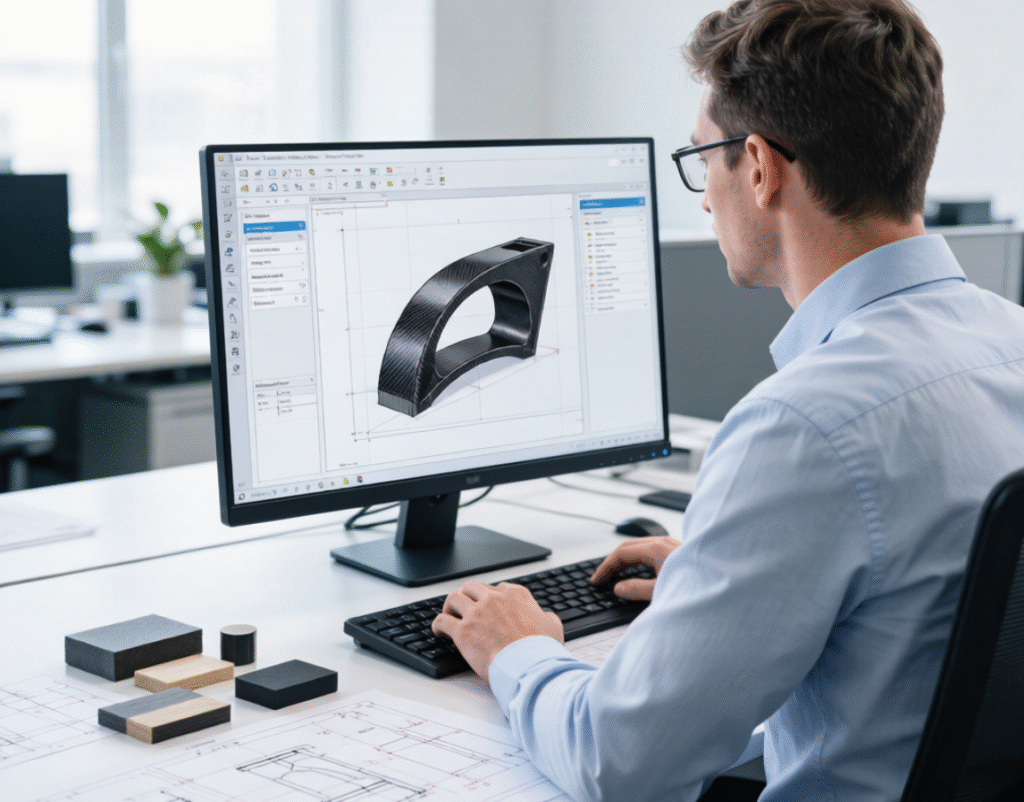
Optional but helpful: 3D models (STEP/IGES), photographic references of existing installations, competitive product samples.
Phase 2: Design & Engineering
Based on your requirements, the manufacturer’s engineering team will:
- Select the appropriate resin system (polyester, vinyl ester, epoxy, or phenolic)
- Choose the fiber type and orientation (E-glass, ECR-glass, mat, roving)
- Design the structural laminate (number and type of layers)
- Calculate load capacity and deflection
- Determine manufacturing method (molding, pultrusion, hand lay-up)
Design choices follow recognized industry standards, including the ACMA guidelines for structural composite design. For standard gratings, see our FRP grating range for reference.
Phase 3: Mold Making
For non-standard shapes, a mold must be fabricated. Mold costs depend on complexity:
| Mold Type | Typical Cost | Lead Time | Usage |
|---|---|---|---|
| Simple flat mold | $500–2,000 | 5–7 days | Cut-to-size panels, simple shapes |
| Moderate complexity mold | $2,000–8,000 | 7–15 days | Channels, custom profiles, shaped parts |
| Complex 3D mold | $8,000–30,000+ | 15–30 days | Large structural components, complex geometries |
Phase 4: Production
With the mold ready and materials sourced, production can begin. Depending on the chosen manufacturing method:
- Molded products: Layers of fiberglass and resin are placed in the mold and cured under heat and pressure
- Pultruded products: Continuous fiber is pulled through resin and heated die to form the profile, then cut to length
- Hand lay-up: For very large or complex parts, skilled technicians build up the laminate by hand
Phase 5: Quality Verification
Before shipping, every custom product is inspected for:
- Dimensional accuracy against the approved design
- Visual quality per ASTM D4385 (standard practice for visual inspection of FRP products)
- Defects: voids, delamination, surface defects, contamination
- Mechanical testing (if required): flexural strength, hardness, Barcol hardness
- Resin curing verification (Barcol hardness test)
Typical Timeline
| Phase | Duration |
|---|---|
| Requirements & quoting | 1–3 days |
| Design & engineering | 3–7 days |
| Mold making (if needed) | 5–15 days |
| Materials procurement | 3–7 days |
| Production | 5–15 days |
| Quality control | 2–3 days |
| Total typical | 20–45 days |
Pro tip for first-time buyers: Request a prototype or sample before committing to full production. A small sample order (even 1-2 pieces) lets you verify the product meets your expectations before scaling up.
Frequently Asked Questions
What info is needed for a custom quote?
Dimensions, loads, environment, quantity, and any drawings or references.
How long does custom production take?
20–45 days from design approval: design, mold making, procurement, production, and QC.
What is the MOQ for custom products?
As low as 1 piece for simple modifications. 50–500 pieces for new mold creation.
Can I order a prototype first?
Yes. Prototype or sample production is standard practice before committing to full production.
What standards apply?
ACMA/ANSI for grating, ASTM D4385 for quality, ASTM E84 for fire rating, ISO 9001 for quality systems.
Conclusion
The custom FRP product process is well-established and proven. By understanding each phase — from requirements analysis through design, mold making, production, and quality verification — you can work confidently with your FRP manufacturer to create the exact product your project needs.