
Introduction: Why Plant Support Stakes Matter
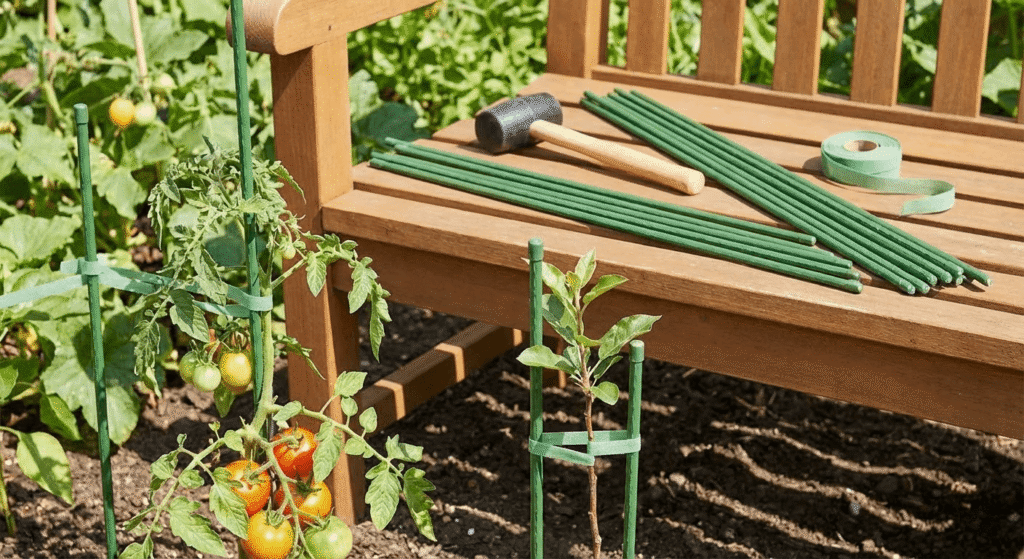
In agriculture, horticulture, and greenhouse growing, plant support systems play a critical role in plant health and crop yield. Without proper support, plants can bend, break, or collapse under their own weight, wind, or rain. This often leads to reduced airflow, poor light exposure, and higher risk of disease.
To solve these problems, many growers are moving away from traditional materials and choosing fiberglass plant support stakes as a long-term and reliable solution.
What Are Fiberglass Plant Support Stakes?
Fiberglass plant support stakes are made from fiber-reinforced polymer (FRP), typically produced using the pultrusion process. This creates stakes with a consistent cross-section, uniform strength, and smooth surface.
Compared with wood, bamboo, or metal stakes, fiberglass stakes offer a balance of strength, durability, and low maintenance, making them well suited for repeated and long-term use.
Key Advantages of Fiberglass Plant Support Stakes
1. High Strength with Low Weight
Fiberglass has an excellent strength-to-weight ratio.
The stakes are strong enough to support heavy crops, yet light enough for easy handling and installation.
This reduces labor effort during setup and removal.
2. Corrosion-Resistant and Weatherproof
Fiberglass does not rot like wood and does not rust like metal.
It performs well in environments with:
High humidity
Frequent irrigation
Fertilizers and pesticides
This makes fiberglass stakes ideal for greenhouses and outdoor farming.
3. Long Service Life and Lower Long-Term Cost
While the initial cost of fiberglass stakes may be higher than bamboo or wooden stakes, their service life can reach 10–20 years or more.
Because they can be reused season after season, the total cost over time is significantly lower.
4. Smooth Surface That Protects Plants
Fiberglass stakes have a smooth, burr-free surface.
This helps prevent damage to plant stems and reduces the risk of infection caused by cuts or abrasions.
Common Sizes and Custom Options
Fiberglass plant support stakes are available in a wide range of specifications:
Diameter: 6 mm, 8 mm, 10 mm, 12 mm, and more
Length: 0.6 m to 3.0 m (custom lengths available)
Color: Green, black, brown, or custom colors
Surface finish: Smooth, sanded, or anti-slip coating
UV-resistant additives can be added for long-term outdoor exposure.
Typical Applications
Fiberglass plant support stakes are widely used in different growing systems:
Agriculture and Commercial Farming
Tomatoes, peppers, cucumbers
Grapes and berry crops
Beans and climbing vegetables
Horticulture and Landscaping
Flower support
Nursery and seedling production
Landscape plants and shrubs
Greenhouse and Modern Farming
Greenhouse vegetable production
Hydroponic systems
High-density vertical growing
How to Choose the Right Fiberglass Stake
When selecting fiberglass plant support stakes, consider the following factors:
Plant height and weight
Growing cycle (single season or multi-year use)
Environmental conditions (humidity, UV exposure)
Installation method (single stake, trellis system, or frame support)
For commercial growers, choosing a slightly thicker stake often provides better stability and longer service life.
Fiberglass vs Traditional Plant Support Materials
| Feature | Fiberglass Stakes | Wood / Bamboo | Metal Stakes |
|---|---|---|---|
| Weather resistance | Excellent | Poor | Moderate |
| Rust / Rot | No | Yes | Yes |
| Service life | 10–20 years | 1–3 years | 5–8 years |
| Weight | Light | Light | Heavy |
| Maintenance | Very low | High | Medium |
| Plant safety | High | Medium | Medium |
Maintenance and Reuse Tips
Fiberglass plant support stakes require very little maintenance:
Clean soil and residue after use
Store in a dry, ventilated area
Avoid excessive bending or heavy impact
With proper handling, the same stakes can be reused for many growing seasons.
Conclusion: Why Fiberglass Stakes Are a Smart Choice
As agriculture moves toward higher efficiency and sustainability, disposable support materials are becoming less practical. Fiberglass plant support stakes offer durability, stability, and long-term value that traditional materials cannot match.
For growers looking to reduce labor, lower replacement costs, and improve crop management, fiberglass plant support stakes are not just an alternative—but a smarter long-term investment.

