
Chemical plants operate in extremely harsh environments—constant exposure to corrosive liquids, chemical fumes, humidity, oil residues, and high temperatures.
Traditional walkway materials such as steel often fail in these conditions because they corrode quickly, become slippery, and require continuous maintenance.
For these reasons, many facilities are upgrading their access walkways and platforms to FRP (Fiberglass Reinforced Plastic) grating systems.
Machs Composite provides engineered FRP solutions specifically designed for the demanding needs of chemical processing plants.
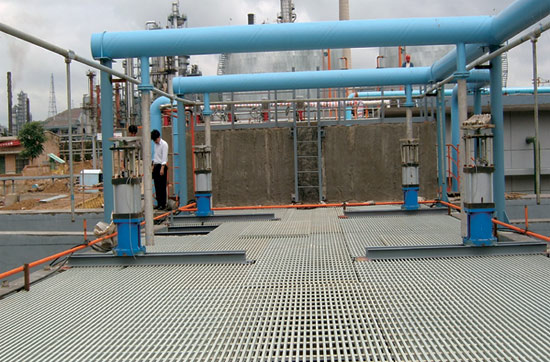
Why FRP Grating Is the Ideal Choice for Chemical Plant Walkways
Superior Corrosion Resistance
Chemical plants contain acids, alkalis, solvents, chlorides, and various corrosive media.
Even galvanized or coated steel eventually rusts, peels, or weakens under continuous chemical exposure.
FRP grating offers outstanding resistance to:
Acid and alkaline environments
Chemical fumes and vapor
Saltwater and humidity
Long-term outdoor exposure
This ensures longer service life and significantly lower maintenance costs.
Excellent Slip Resistance for Worker Safety
Chemical facilities often face wet floors, oil drips, fluid leaks, and slippery surfaces.
Machs FRP grating provides enhanced safety through:
Gritted anti-slip surface
Open mesh for efficient drainage
High friction even in wet or oily conditions
This ensures stable footing for daily operations and maintenance activities.
Lightweight Structure with High Strength
FRP grating is much lighter than steel—typically only 25–35% of its weight—while still offering impressive load-bearing performance.
This makes it ideal for:
Elevated walkways
Pipe rack platforms
Tank-top inspection paths
Maintenance decks in confined spaces
Advantages of lightweight construction:
Easy manual handling
Faster installation
Reduced structural load on existing supports
Perfect for replacement projects in older facilities
Non-Conductive and Thermally Stable
Chemical plants often combine electrical systems, cable trays, pumps, and high-temperature pipelines.
FRP grating enhances safety through:
Electrical non-conductivity
Low thermal conductivity
Spark-free material properties
This makes FRP a safer alternative to steel in hazardous or sensitive zones.
Long Service Life with Minimal Maintenance
Maintenance shutdowns in chemical factories are costly and disruptive.
FRP grating significantly reduces maintenance needs:
No rust
No repainting
No welding repair
Resistant to UV, moisture, and chemical aging
Its typical lifespan can exceed 20–30 years, making it one of the most cost-effective choices for industrial walkways.
Typical Applications in Chemical Plants
Machs FRP grating is suitable for a wide range of chemical processing environments:
Reactor operation platforms
Distillation and filtration areas
Pump room walkways
Tank-top access paths
Pipe rack walkways
Wastewater treatment zones
Chemical dosing stations
Maintenance and inspection platforms
Any area exposed to corrosion, moisture, or chemical contact benefits from FRP.
Engineering & Design Considerations
When designing FRP walkways for chemical plants, engineers should first select the appropriate grating type—molded grating for strong corrosion resistance or pultruded grating for higher load-bearing needs. Resin selection is equally important: vinyl ester resin is recommended for environments with continuous chemical exposure.
In addition, the platform must be designed with proper load capacity and support span based on worker traffic and maintenance equipment. A gritted anti-slip surface is advisable for wet or oily areas, and stainless-steel fixing clips should always be used to secure panels, preventing movement and ensuring long-term operational safety.
FRP Products Provided by Machs Composite
Machs offers a complete FRP platform system, including:
FRP Stair Treads
We support engineering design, drawings, loading analysis, and full accessory packages.
Conclusion: Why FRP Is the Better Long-Term Choice for Chemical Plants
FRP grating provides:
Long-term corrosion resistance
Reliable anti-slip performance
Lightweight yet strong structure
Electrical and thermal insulation
Long lifespan with minimal maintenance
For chemical plant walkways, FRP is a safer, more durable, and more economical choice than traditional steel.

