

FRP (Fiberglass Reinforced Plastic) grating is widely used in chemical plants, wastewater facilities, power stations, and food factories because it resists corrosion, is lightweight yet strong, and needs less upkeep than steel. Still, “low maintenance” does not mean “no maintenance.” Without regular cleaning, slip resistance and durability can suffer.
This guide explains how to keep FRP grating in top condition through proper cleaning and simple maintenance practices, supported by real-world case studies.
1. Why FRP Grating Still Requires Maintenance
FRP grating does not rust like steel, but it can still face challenges in long-term use:
Slippery surfaces: Accumulated oil, algae, or dust can reduce slip resistance.
Chemical residues: Acidic or alkaline spills, or salt spray, may cause surface discoloration or resin degradation.
UV exposure: Prolonged outdoor sunlight accelerates surface aging.
Regular cleaning and inspection not only keep gratings safe and presentable but also extend service life and prevent premature replacement.
2. Common Contaminants and Their Risks
Different industries expose FRP gratings to different types of contaminants:
Inorganic particles: Sand, dust, and metal filings wear down the anti-slip surface.
Organic substances: Oil, grease, algae, and mildew create slippery surfaces and microbial growth.
Chemical residues: Acids, alkalis, or solvents may gradually erode or discolor resin.
Combustible materials: Dust or fibers in refineries and power plants can increase fire hazards.
3. Basic Workflow for Cleaning and Maintenance
3.1 Regular Cleaning
Suggested frequency:
Light-duty indoor areas: once every 1–3 months
Moderate-duty outdoor or oily areas: every 2–4 weeks
Heavy-duty environments (chemical plants, coastal sites): weekly or even daily
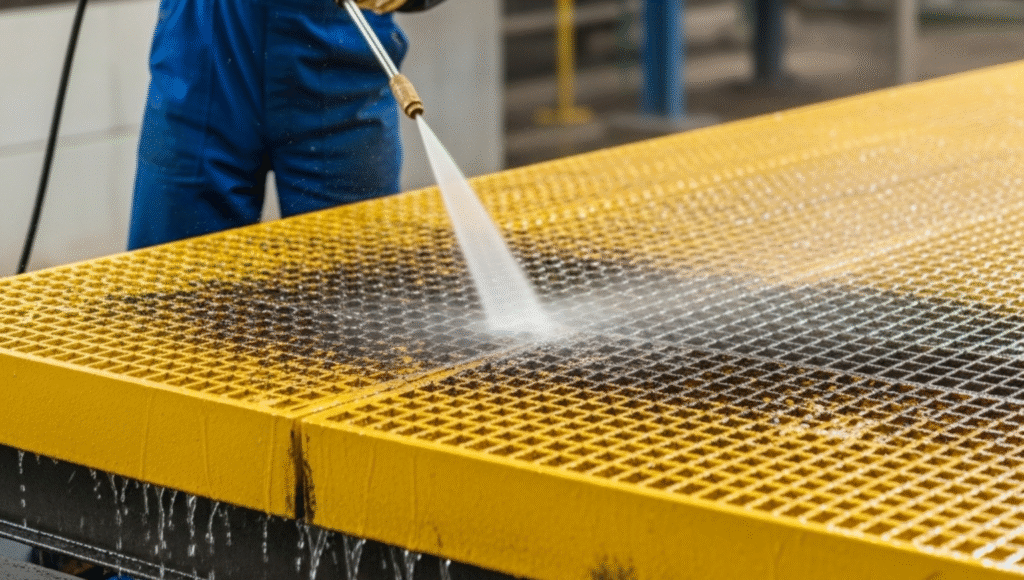
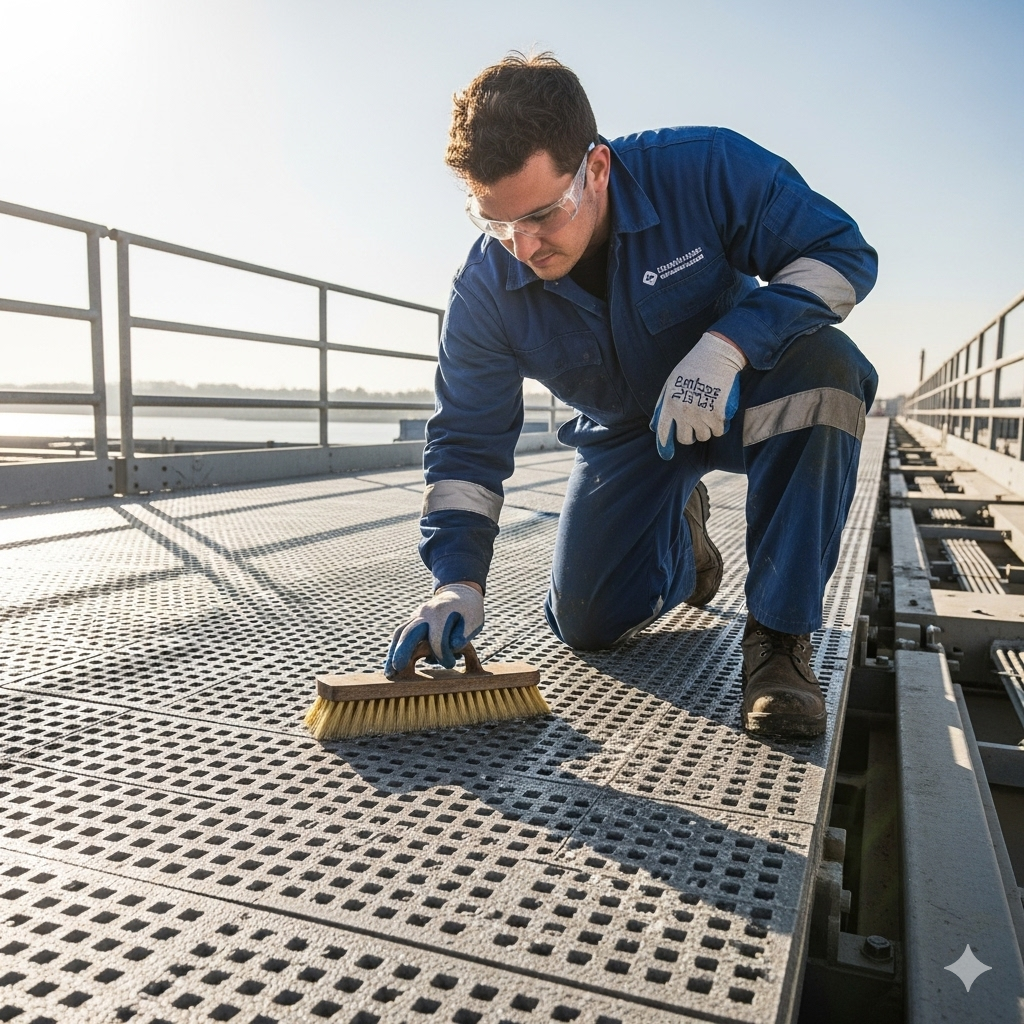
Method: Sweep or vacuum first, then rinse with low-pressure water. Use a pH-neutral cleaner when necessary. Avoid strong acids and alkalis.
3.2 Deep Cleaning
For heavy oil stains or chemical deposits, apply alkaline degreasers or mild acids (e.g., citric acid), followed by thorough rinsing.
For localized contaminants such as adhesives or paint, limited use of alcohol-based solvents may be acceptable, but ensure they are compatible cleaners with the resin system.
3.3 Inspection and Repair After Cleaning
Check for cracks, delamination, or worn anti-slip surfaces.
Small cracks can often be repaired using epoxy resin instead of full replacement.
For outdoor installations, consider applying a UV-resistant coating to slow down weathering.
4. Real-World Case Studies
Case 1: Wastewater Treatment Plant – Cost Savings
A coastal wastewater plant previously used steel gratings that required annual rust removal and repainting. In 2016, they replaced them with FRP gratings. Over eight years, the only maintenance required was regular rinsing and light cleaning. The plant reduced maintenance costs by about 30% while avoiding corrosion-related accidents.
Case 2: Chemical Plant – Corrosion Resistance
A chemical facility installed vinyl ester FRP gratings in its acid and alkali handling zones, combined with a biweekly cleaning plan. After five years of operation, the gratings showed only light surface stains, with no structural damage. Cleaning required only neutral detergents and low-pressure water, cutting replacement and repair costs by nearly half.
Case 3: Food Processing Plant – Hygiene Compliance
A chemical facility installed vinyl ester FRP gratings in its acid and alkali handling zones, combined with a biweekly cleaning plan. After five years of operation, the gratings showed only light surface stains, with no structural damage. Cleaning required only neutral detergents and low-pressure water, cutting replacement and repair costs by nearly half.
5. Best Practice Recommendations
Establish a cleaning schedule instead of waiting for heavy contamination.
Always use compatible cleaners; avoid bleach, strong acids, or abrasive tools.
Combine cleaning with inspection, repairing minor issues promptly.
For outdoor installations, consider applying a UV-resistant coating to delay aging.
Conclusion
FRP gratings are low-maintenance but not maintenance-free. With structured cleaning and inspection, companies can extend service life, achieve long-term cost savings, and ensure workplace safety.
From wastewater plants to chemical facilities and food factories, real-world cases show that FRP gratings are easier to clean, more durable, and more economical to maintain than steel gratings.